
Scottish Art News
Latest news
Magazine
News & Press
Publications
Royal Glasgow Institute of the Fine Arts: Putting the RGI Back on the Map
By Neil Cooper, 13.02.2026
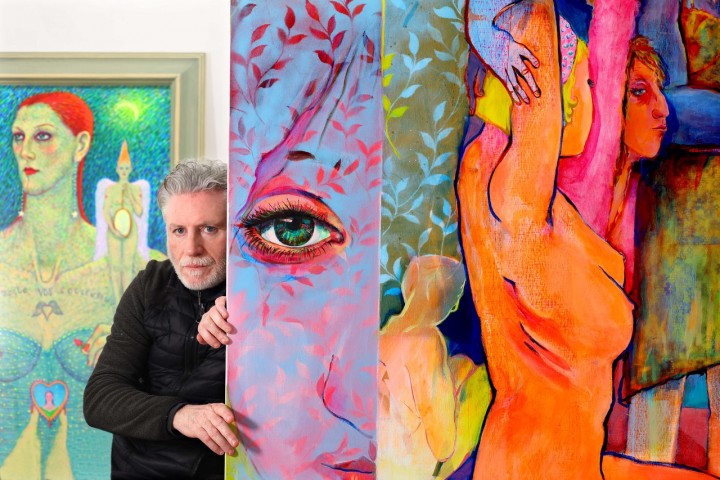
When Queen Victoria granted what was about to become the Royal Glasgow Institute (RGI) of the Fine Arts its Royal Charter in 1896, the then thirty-five-year-old organisation was at the centre of Glasgow’s contemporary art scene. At various times, the likes of Charles Rennie Mackintosh and assorted Glasgow Boys and Scottish Colourists were all fully paid-up members of an organisation that at one point hosted the biggest open exhibitions outside London.
130 years on, and after a few years off radar, the RGI is back with its largest exhibition in a decade. This comes with a bold new impetus to reclaim the organisation’s place at the heart of the Glasgow scene. This is most evident in RGI: Celebrating 130 Years of Royal Status, a major new group show at the Lillie Art Gallery in Milngavie.
This follows a series of small RGI exhibitions that have taken place since December 2024 at the John D Kelly Gallery, whose city centre presence on Douglas Street has literally provided a shop window to raise the organisation’s profile. The current show by former Deputy Director of Glasgow School of Art, James Cosgrove – People, Places and Other Strange Happenings – is testament to that.
Much of the drive behind the RGI’s renaissance comes from RGI president Gordon Murray and administrator Michael Durning, who are intent on putting the RGI back on the artistic map, not just in Glasgow, but throughout Scotland and the rest of the world.
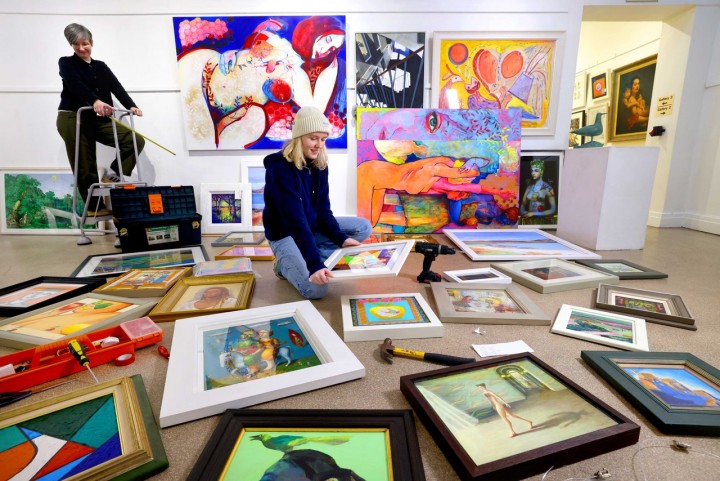 Team members at the Lillie Art Gallery
“I sort of helped kick start a group that was interested in raising the profile of the RGI again around September 2024,” explains Murray, who was elected president that October. “We appointed Michael not long after that. Since then we’ve built up a bit of momentum, and I think the profile the Lillie exhibition has attracted has helped open up a lot of other avenues. It's also timely in the sense of this being the first big opportunity we've had to actually make sure we've got as wide a database of potential membership as possible.”
The Glasgow Institute of the Fine Arts was founded in 1861 by a group of prominent Glaswegians, including artists John Graham, John Mossman and C N Woolworth. As one of the earliest examples of artist-led DIY initiatives, it aimed to plug the gap for regular exhibitions of contemporary art in a city where theatres and concert halls thrived, but galleries for new work were lacking. Hiring what was then the Corporation Galleries, later renamed the McLellan Galleries on Sauchiehall Street, the Glasgow Institute saw its first exhibition attract an audience of more than 40,000.
“The early iteration of the RGI became highly successful because of the commerce of the city and of industrial Scotland and industrial Britain,” Durning points out. “That confidence allowed Glasgow artists and art societies to become the arbiters of contemporary art, and it was something very new and rebellious. But every organisation has periods of waxing and waning, and the RGI disappeared from the cultural scene. It's fashionable to target these organisations because they have a Victorian baggage, but I like to look at them as the country's heirlooms. The members of the RGI were all involved with Glasgow School of Art, even before Mackintosh turned up, and because it was centred around Sauchiehall Street and Bath Street, once artists graduated, they were naturally directed towards these massive exhibitions that were held by the RGI and McLellan Galleries.”
In more recent times, the category B listed McLellan Galleries were used as part of Glasgow School of Art for storage and studio space as part of a proposed redevelopment of the GSA campus. Since the two GSA fires, however, the building has remained closed. Despite this, for the newly revitalised RGI, at least, a full renaissance is the aim.
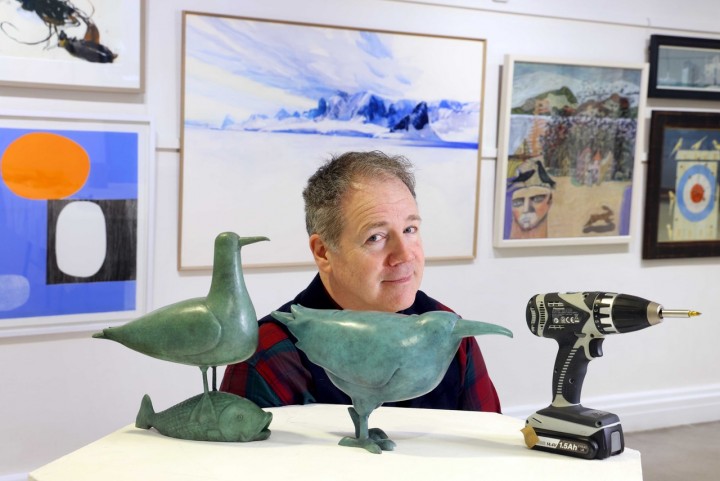 Michael Durning, administrator for the RGI. Artwork by Shona Kinloch
“Since we started trying to regenerate the RGI eighteen months ago, there has been support from artists from all over Scotland,” Murray points out. “So if we want to put on a show, there's no shortage of people prepared to do it. The question is, how do we get that out to a wider audience that's prepared to actually look at artwork and invest in artwork as part of the ongoing development of the cultural scene Scotland? That's important, because when the RGI started, there was a lot of spare cash being invested in different elements of culture, and we need to try and get back to that in order to support it. The art is there, and the RGI is about promoting the art in order to promote the artists.”
Durning concurs: “All RGI artists carry Glasgow in their name when they go exhibiting abroad, or down south,” he says. “They take the country and the city with them. But we don't only focus on local artists. We recognise artists all over Scotland as a cohort, so it’s a national organisation that focuses particularly on its identity with Glasgow. That heritage is very important, and it's a heritage that is shared by a lot of people and different organisations.”
“We're using that heritage to link with other arts institutions, to come together, to have a dialogue where we can coordinate with each other to get a movement of people back onto the street and through each other's venues, to increase foot fall in the area, so we all share in that heritage. There’s a commonality with Mackintosh, the Glasgow Girls and Glasgow Boys. These are your assets that don't cost anything, and that you can utilise. It's not all about money, money, money. You’ve got heritage, and that heritage is something to be proud of.”
RGI: Celebrating 130 Years of Royal Status, is exhibited at Lillie Art Gallery, Milngavie until 20th February.
James Cosgrove – People, Places & Other Strange Happenings is exhibited at John D Kelly Gallery, Glasgow until 7th March.


