The Log of Dinaric
Will Maclean


DESCRIPTION
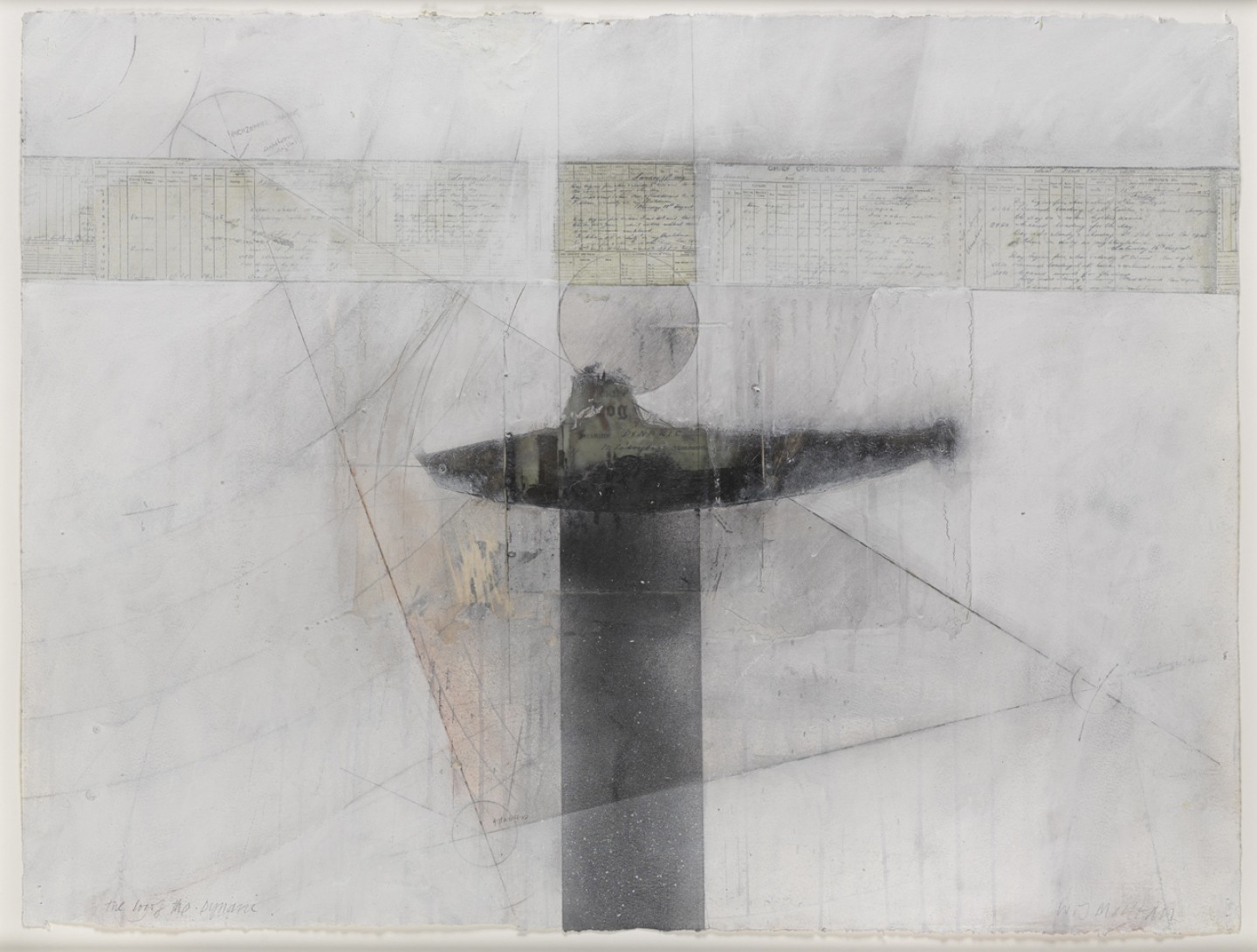
The Log of Dinaric by Will Maclean (b. 1941) combines a fishermen's logbook pages, with geometric lines crossing over elements of the page, and the depiction of a painted shark in the centre. The shark, with its prominent dorsal fin, is coloured black with some white underbelly present underneath its circular eye. The top of the dorsal fin is cut off, as well as its tail and side fins, suggestive of harvesting. The logbook most visible and not diluted against the page rests above the shark, with a prominent circular outline between, and then below the shark there is a rectangular portion of watered down black colour. These create reflections of a fishermen's life and traditions.
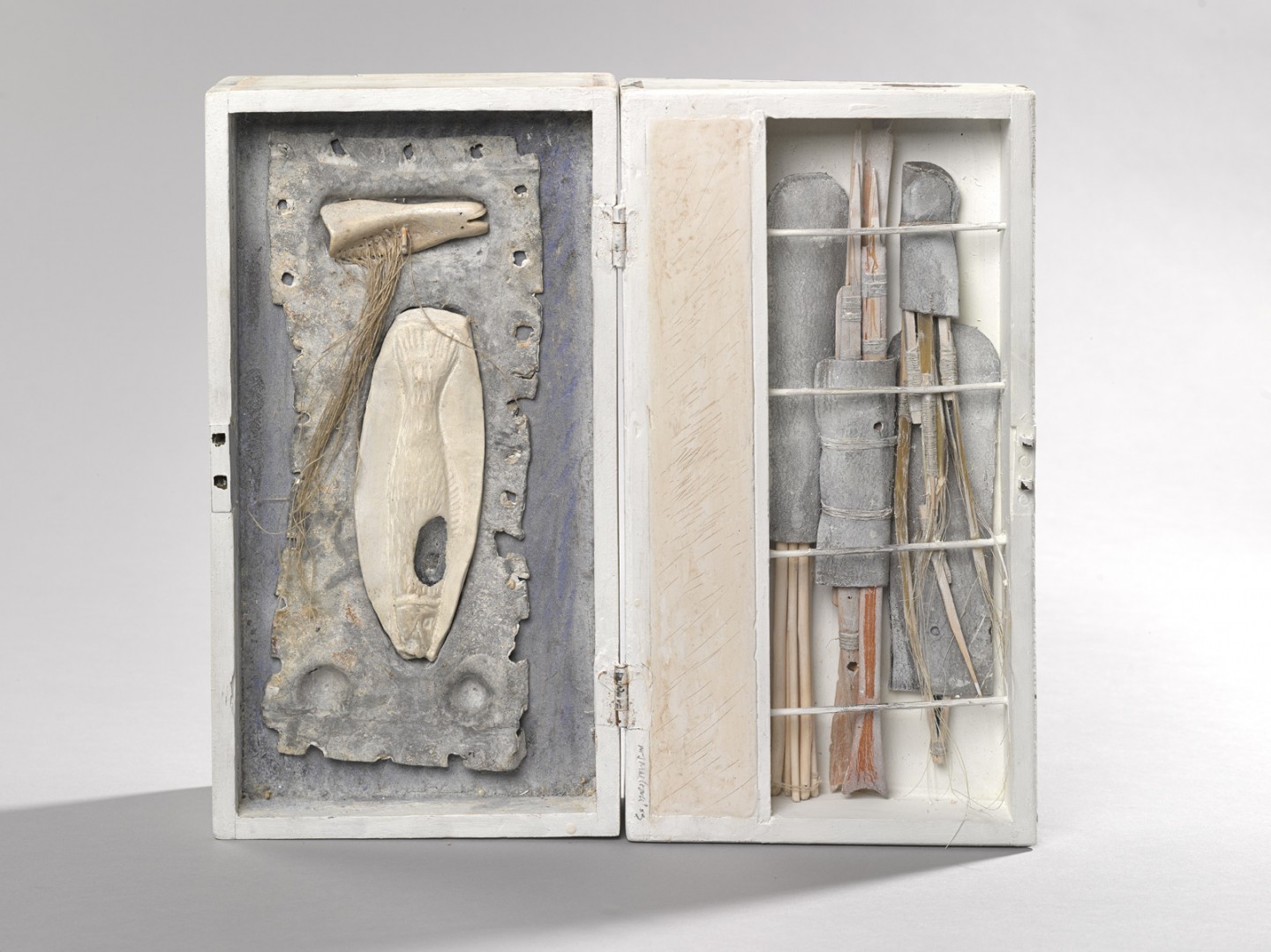
Maclean holds a strong interest in portraying the traditions and history of Scottish fishermen, seen here with a focus on a shark centrally and the logbooks. Maclean's interest in archaeology is also present here, as the arching lines repeated and flowing out from the left corner are characteristic of archaeological rim charts, used to measure the radius of a piece of pottery or other type of vessel.
DETAILS
-
Artist
Will Maclean
-
Date
2008
-
Medium
Mixed media on paper
-
Object number
1009
-
Dimensions unframed
56 × 75.5 cm
-
Dimensions framed
63 × 82.5 × 4 cm
-
Marks
Signed bottom right; titled bottom left
-
Copyright
Ⓒ Will Maclean MBE RSA
ARTIST PROFILE
Will Maclean MBE RSA, born 1941
Maclean, born in Inverness, trained at Gray's School of Art in Aberdeen from 1965 to 1965, spending the summer of 1964 at Hospitalfield in Arbroath, Angus. A travelling scholarship enabled him to visit France, Italy and Greece in 1966-67. He studied for three months at the British School in Rome, where he developed an interest in archaeology that is reflected in his art. After teacher-training in Dundee he taught at schools in Fife. In 1981 he joined the teaching staff of Duncan Jordanstone College of Art in Dundee.
Maclean's art is rooted in his knowledge of the Highlands, the area's people and their history. Through his sculptures and constructions, using driftwood, found objects and carved items, he continues to record the history and traditions of Scottish fishermen and the sea.