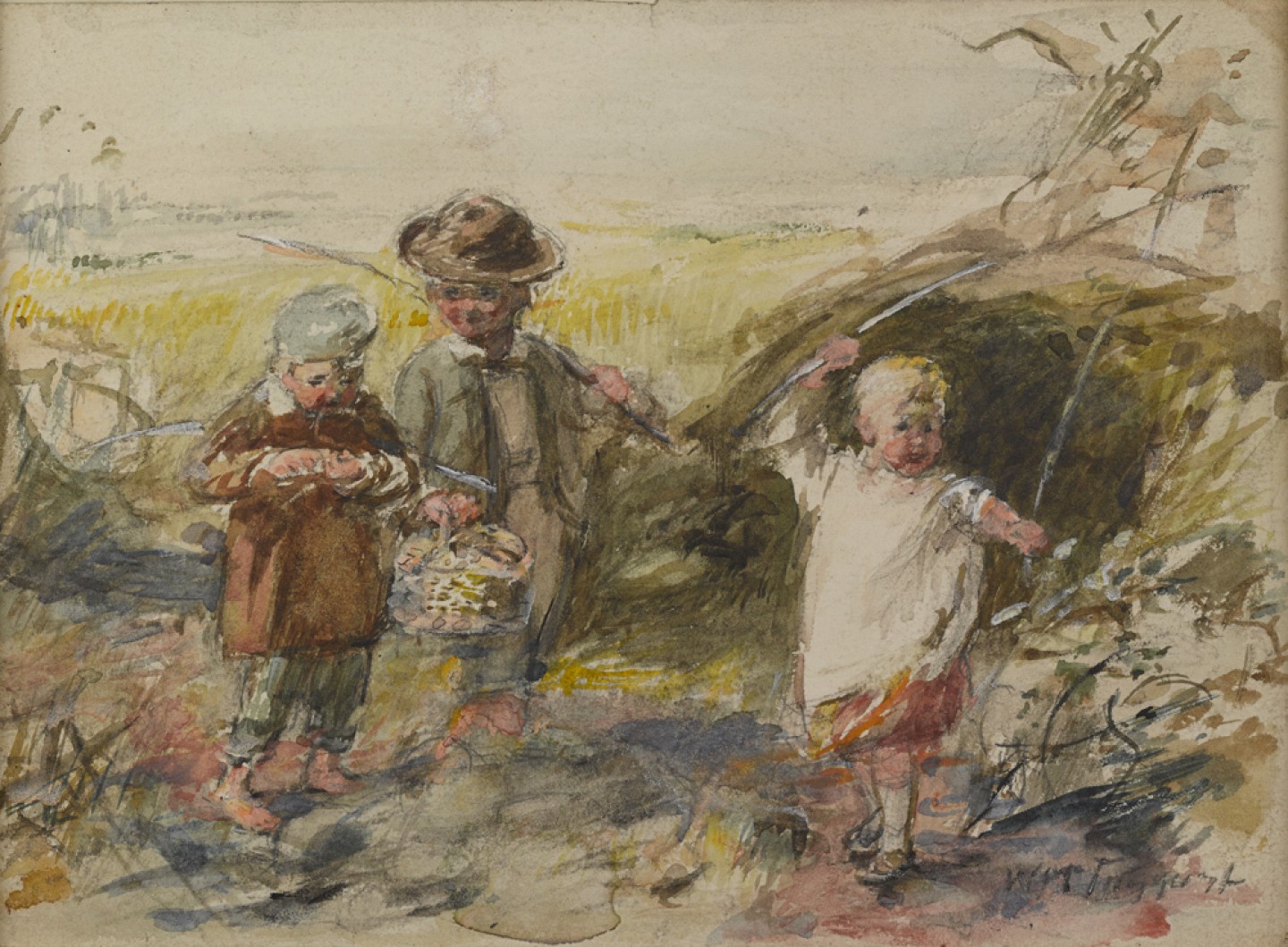
Study for The Young Fishers
William McTaggart


DESCRIPTION
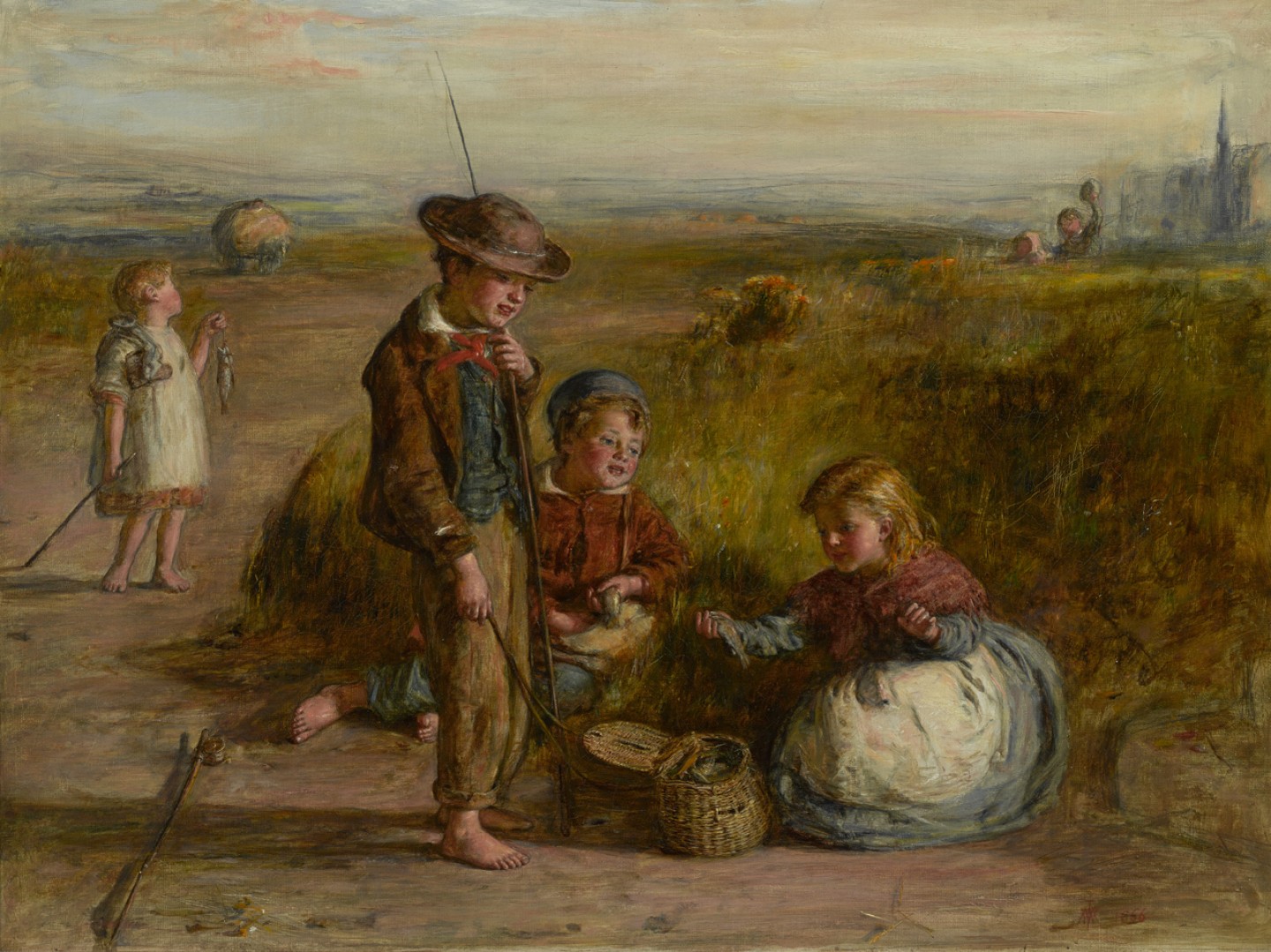
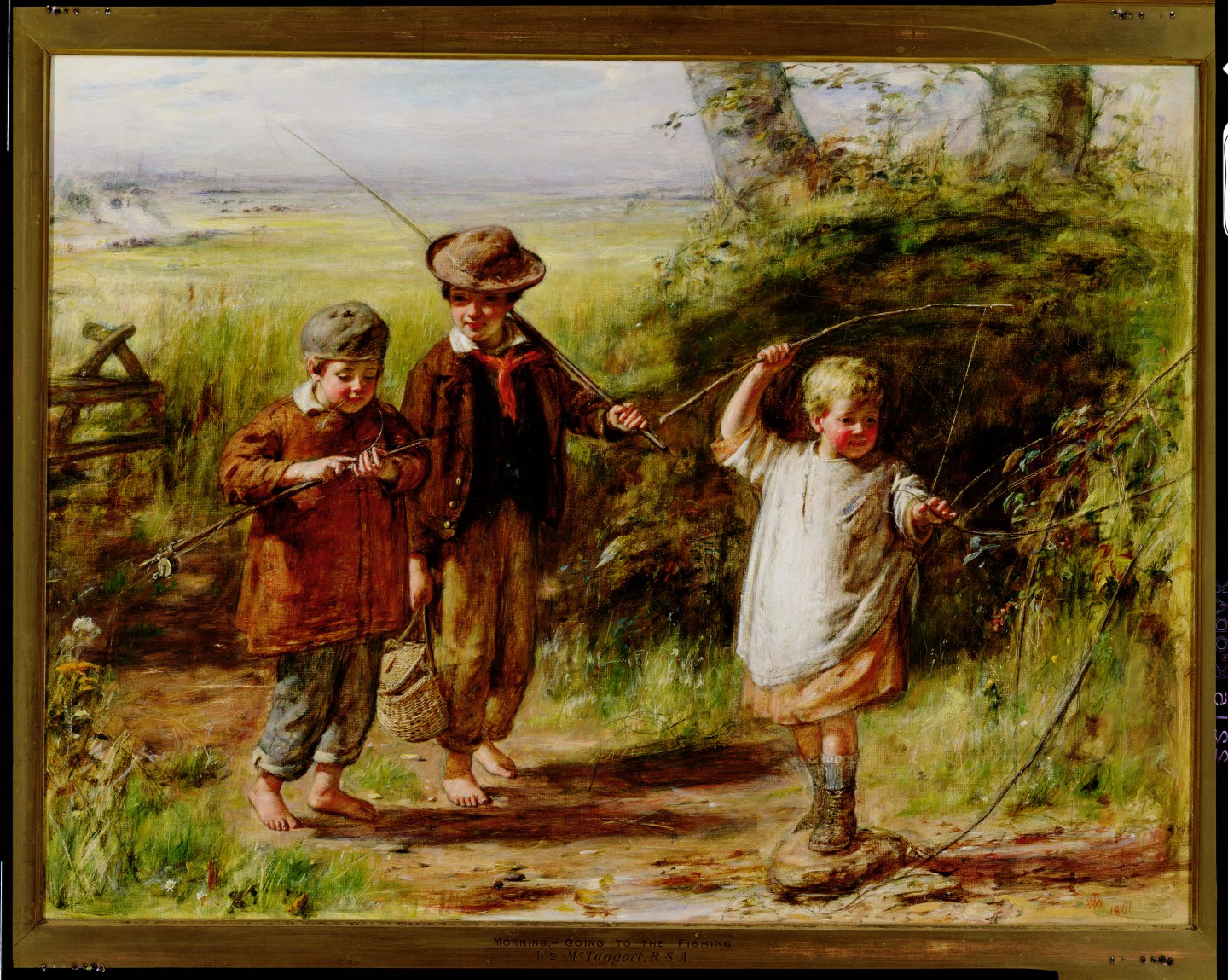
Study for The Young Fishers by William McTaggart (1835-1910) loosely captures three children through quick, layered strokes of watercolour. The colour tones of the piece are in individualized groupings, reflective of the studied nature in which the work was painted. The focus is primarily on the children, with the colours of their clothing, and the actions they are performing.
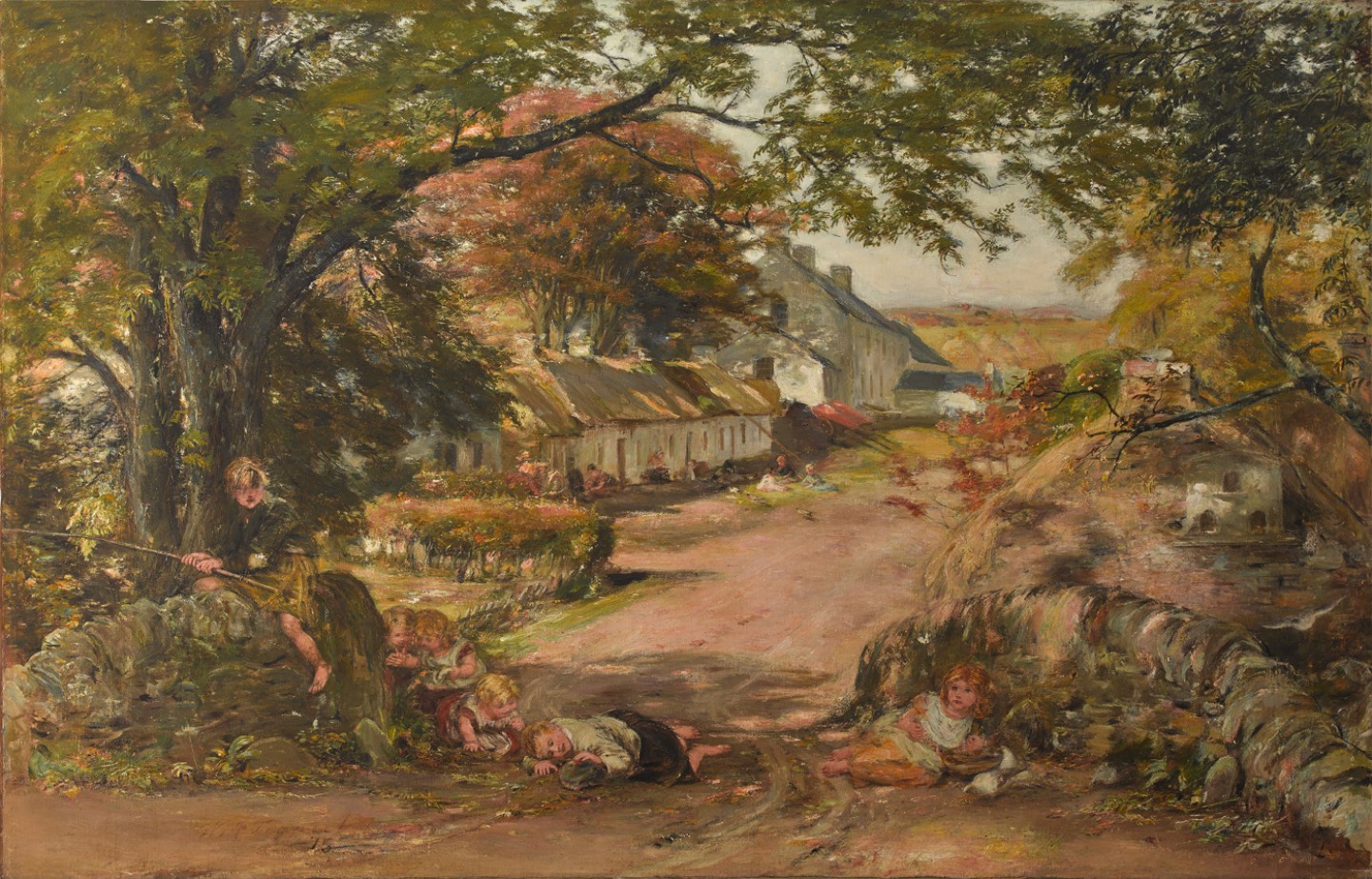
This study formed the basis for the final work, A Day's Fishing: Morning, 1866, with slight differences in that the oldest child in the final work is not holding a basket and the child on the right is stepping on a rock, which is not present in this study. It shows McTaggart's prominence as a practiced painter, who prepared for his paintings that often focused on rural life. This study also shows attention to the placement of shadows, which give the final piece the illusion of depth it needs to appear slightly realistic.
DETAILS
-
Artist
William McTaggart
-
Date
1866
-
Medium
Watercolour on paper
-
Object number
1019
-
Dimensions unframed
13.2 × 17.6 cm
-
Dimensions framed
29 × 35 × 5.5 cm
-
Marks
Signed bottom right
ARTIST PROFILE
William McTaggart RSA VPRSW, 1835-1910
McTaggart is probably the most outstanding and innovative landscape painter Scotland has produced, and has been an important influence on successive generations of Scottish painters. In a career spanning over half a century he displayed an exceptional pattern of consistent development. His early work was influenced by the Pre-Raphaelites, but gradually his technique became looser and he developed his own version of Impressionism. His later work bordered on expressionism. Unlike most of his contemporaries McTaggart did not move to London but spent almost his entire life painting in Scotland. He lived in Edinburgh until 1889, when he moved to Broomieknowe, then in the countryside to the south of the city.
He was born in Aros, Kintyre, the son of an impoverished crofter. When he was twelve he was apprenticed to a Campbeltown apothecary, who recognised his natural talent for drawing and introduced him to the Glasgow painter Daniel Macnee. The latter advised McTaggart to enrol at the Trustees' Academy in Edinburgh, which had just appointed Robert Scott Lauder as its co-director, where his fellow students included Hugh Cameron, George Chalmers, Tom Graham and John Pettie. At the academy McTaggart won several prizes for drawing. Although classes were free, he supported himself by accepting portrait commissions, both while a student and later when he married and had a large family. However, as soon as he felt financially secure he concentrated on landscape and seascape, limiting portraiture as much as he could to family and close friends.