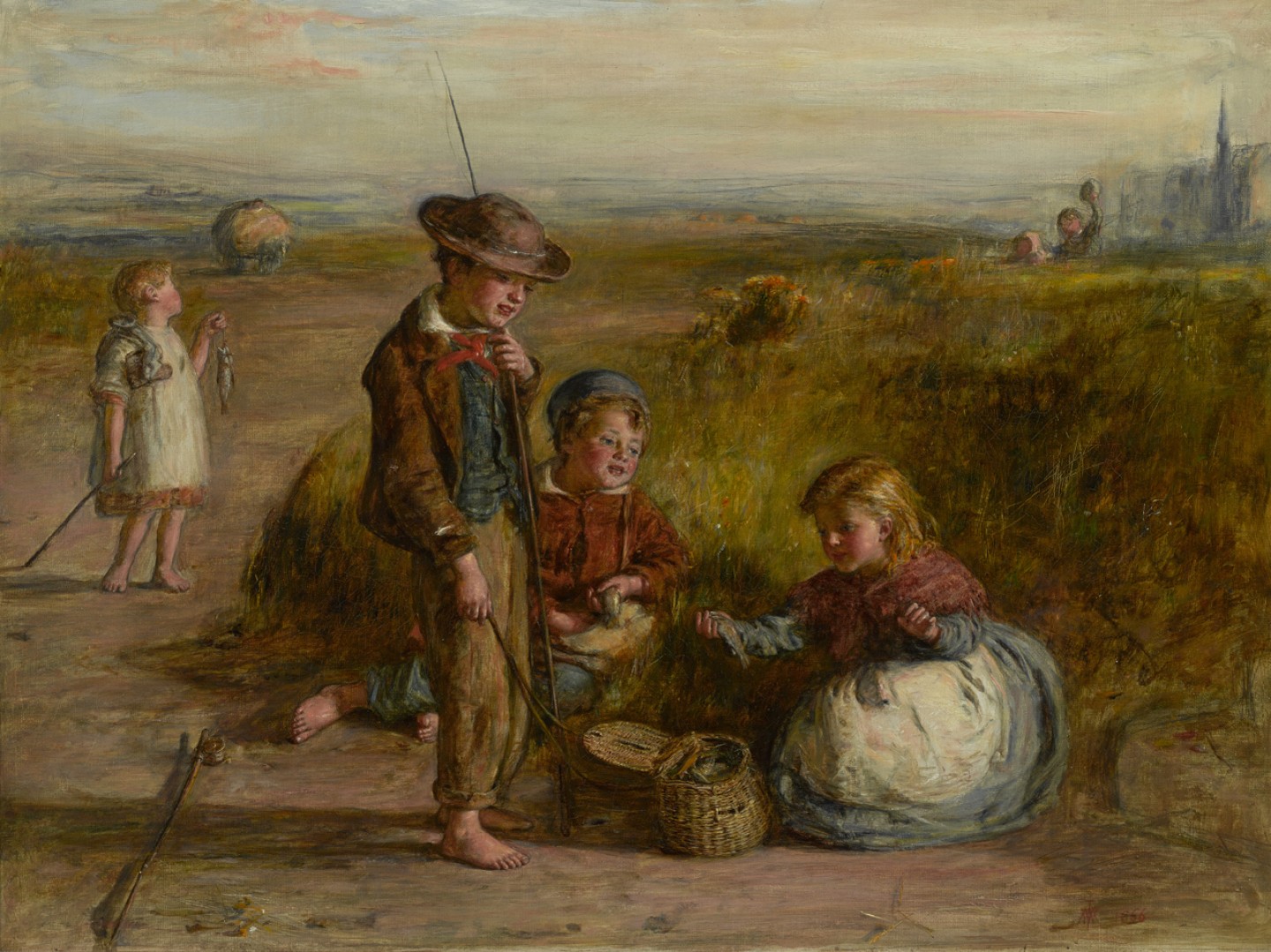
A Day's Fishing: Evening
William McTaggart


DESCRIPTION
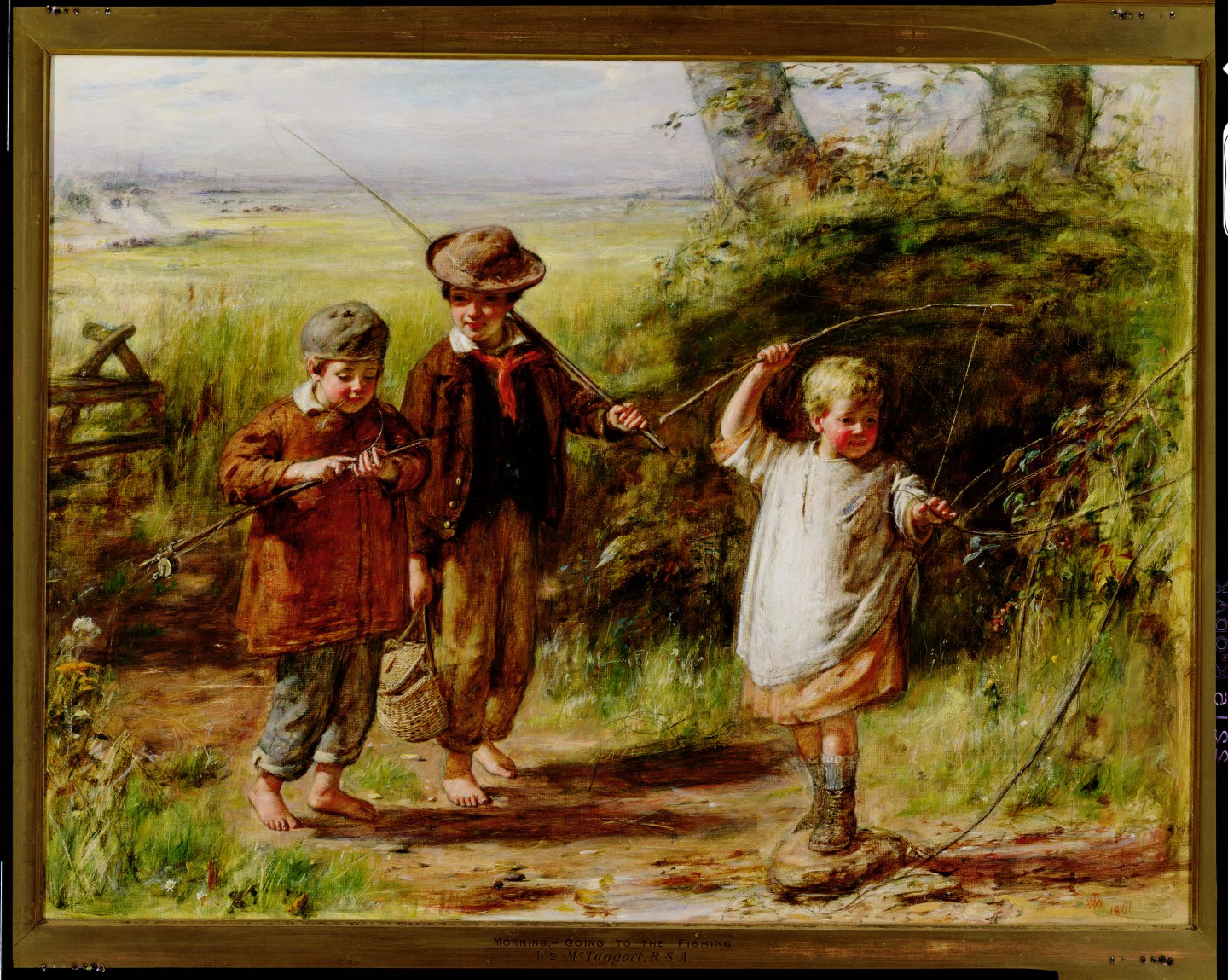
A Day's Fishing: Evening by William McTaggart (1835-1910) depicts a group of children with fishing poles and a fishing basket, called a creel, looking at their catch. Their parents, or adults they know as one of the children appears to acknowledge them by looking towards them, are part of the blur of the background, with indistinguishable features. This contrasts the fine details of the foreground with the children's faces, where McTaggart captures them in realistic detail through rosy cheeks and delicate brush strokes. These fine, thin brush strokes also make up the remainder of the landscape with soft tones of brown, yellow, green that blend through into the darker lines of the horizon line.
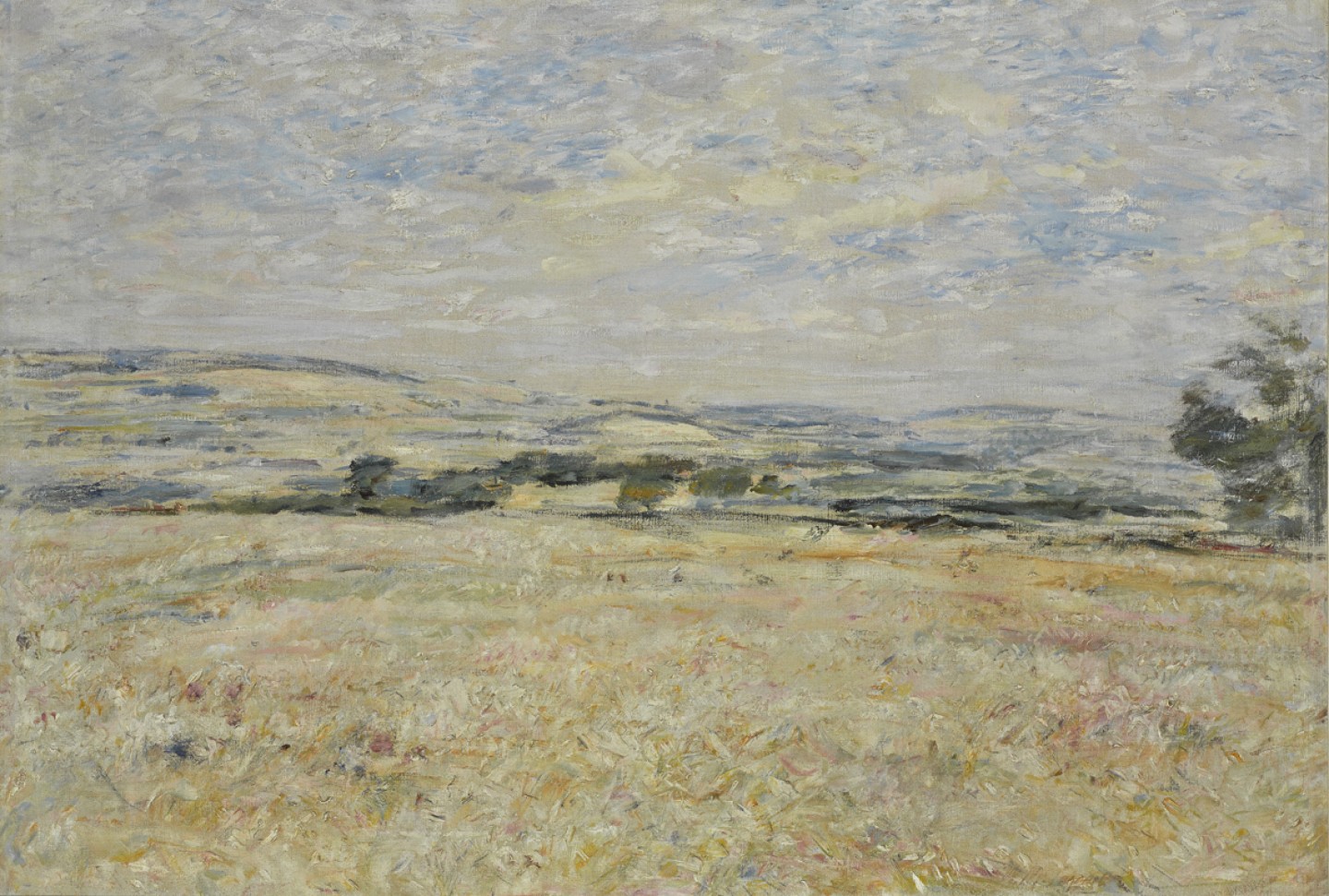
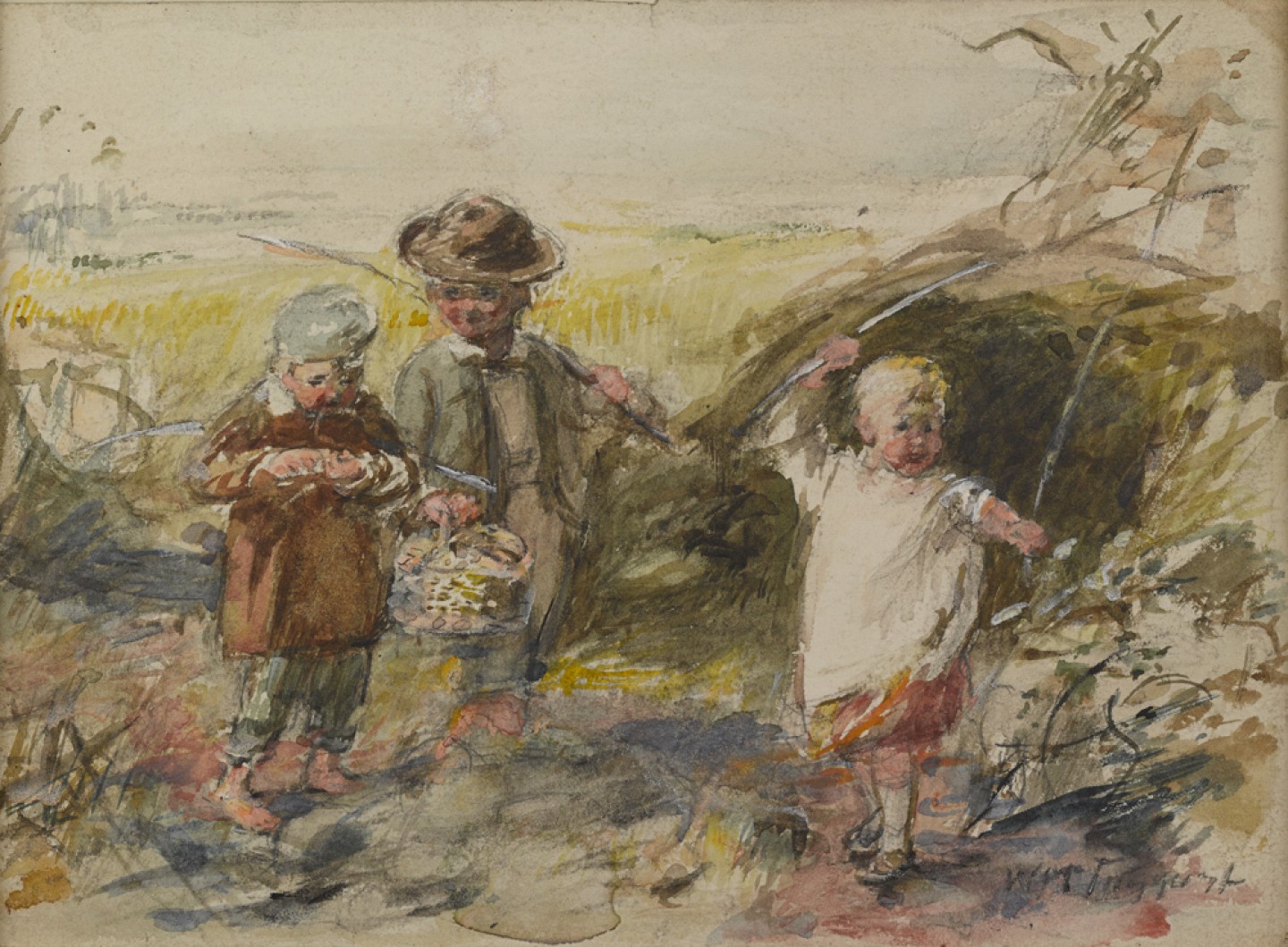
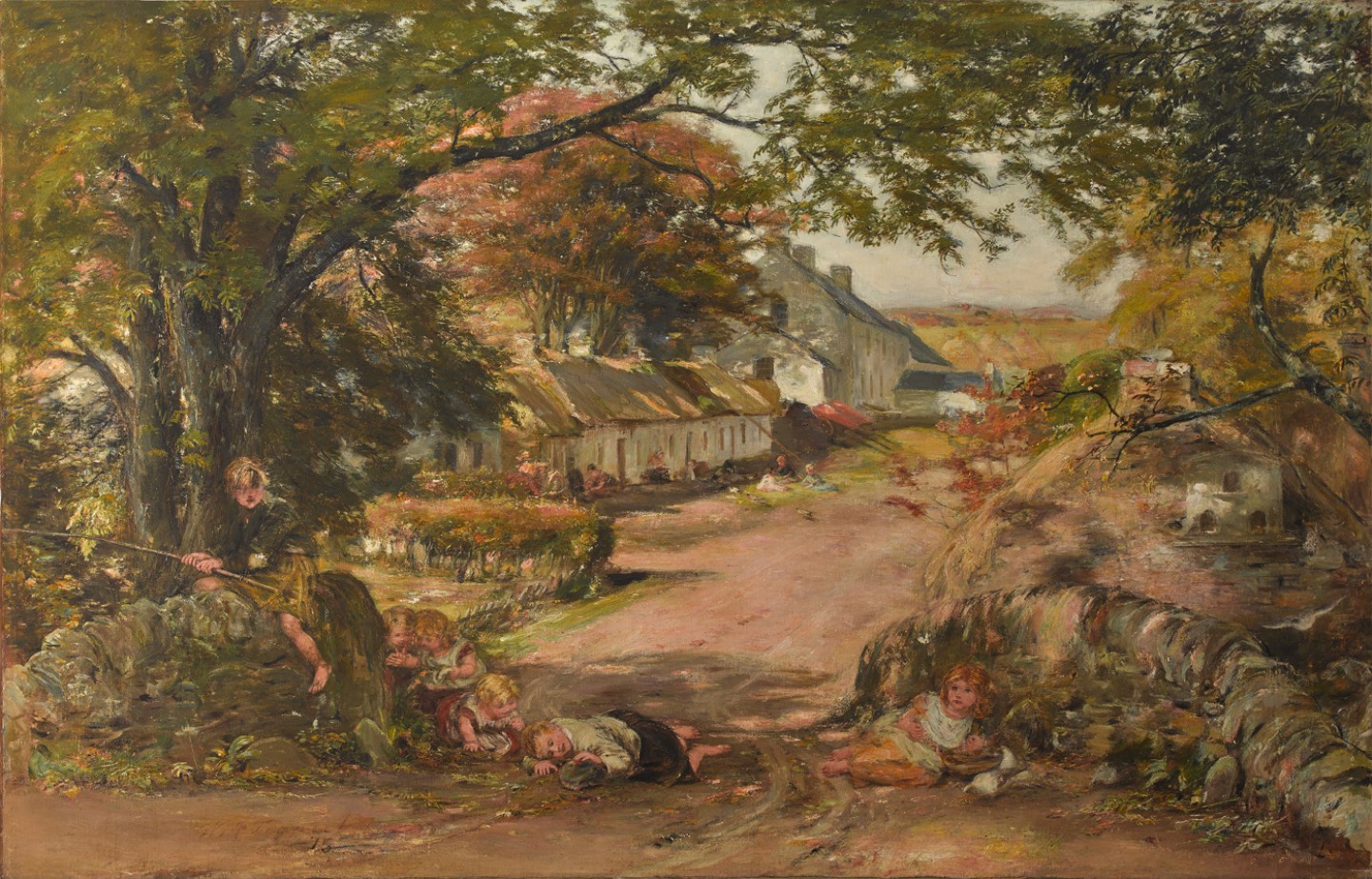
This work's soft, built up brush strokes represent the characteristics of Impressionism that is prominent in McTaggart's work. This is especially evident in the horizon line, which is cascading lines that blend the lower half of the work with the sky and also delineates this through dark lines to divide it. McTaggart is a celebrated landscape artist in Scotland, focusing often on rural scenery such as this one. This work pairs with another work in the collection: A Day's Fishing: Morning, 1866, both representing the same group of children in their day of catching fish.
DETAILS
-
Artist
William McTaggart
-
Date
1866
-
Medium
Oil on canvas
-
Object number
628
-
Dimensions unframed
45 × 64 cm
-
Dimensions framed
69.2 × 85.8 × 10.9 cm
-
Marks
Signed and dated bottom right
ARTIST PROFILE
William McTaggart RSA VPRSW, 1835-1910
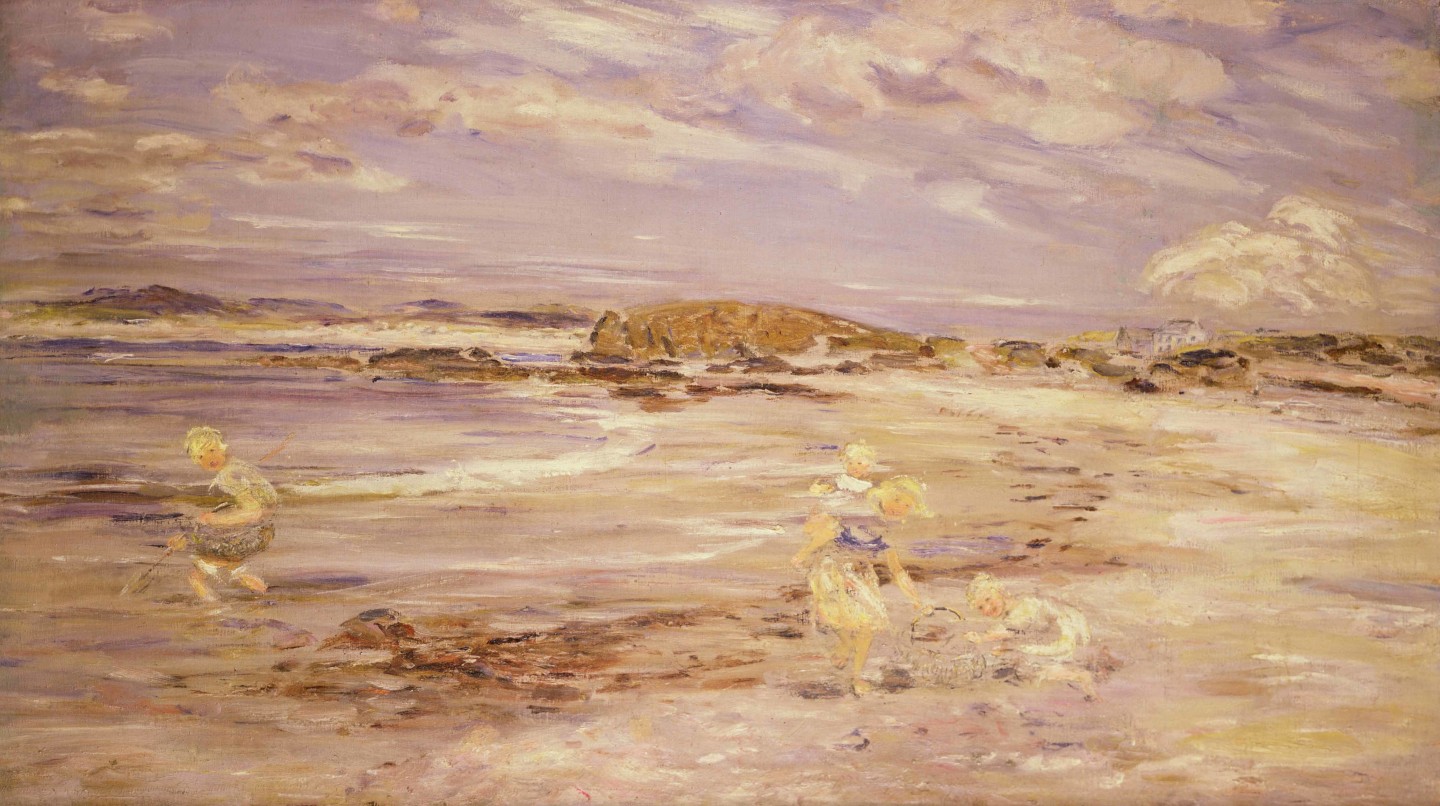
McTaggart is probably the most outstanding and innovative landscape painter Scotland has produced, and has been an important influence on successive generations of Scottish painters. In a career spanning over half a century he displayed an exceptional pattern of consistent development. His early work was influenced by the Pre-Raphaelites, but gradually his technique became looser and he developed his own version of Impressionism. His later work bordered on expressionism. Unlike most of his contemporaries McTaggart did not move to London but spent almost his entire life painting in Scotland. He lived in Edinburgh until 1889, when he moved to Broomieknowe, then in the countryside to the south of the city.
He was born in Aros, Kintyre, the son of an impoverished crofter. When he was twelve he was apprenticed to a Campbeltown apothecary, who recognised his natural talent for drawing and introduced him to the Glasgow painter Daniel Macnee. The latter advised McTaggart to enrol at the Trustees' Academy in Edinburgh, which had just appointed Robert Scott Lauder as its co-director, where his fellow students included Hugh Cameron, George Chalmers, Tom Graham and John Pettie. At the academy McTaggart won several prizes for drawing. Although classes were free, he supported himself by accepting portrait commissions, both while a student and later when he married and had a large family. However, as soon as he felt financially secure he concentrated on landscape and seascape, limiting portraiture as much as he could to family and close friends.