
Scottish Art News
Latest news
Magazine
News & Press
Publications
The Milestones That Made The RSA
By Colin Greenslade, 15.06.2026
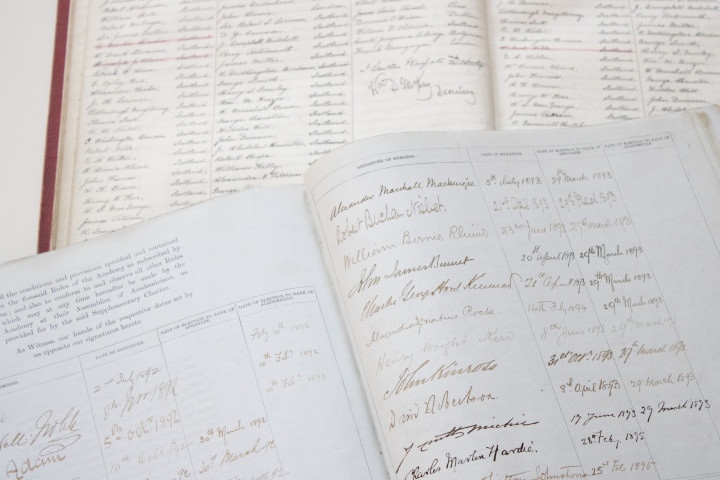
Being asked to pick just ten milestone moments in a 200-year history is no mean feat! Of course, I can look back at my 24 years with the Academy and find ten points just from that period alone. However, I have to go further into the past and try to imagine what the Academy saw as definitive ways to develop and review their activities based upon the original aims. This is what we still do today. As the first director at the Royal Scottish Academy, I am fully aware that I, along with the RSA team and the body of today’s Academicians, are custodians of the continuing development of a great Scottish institution which enables and supports artists and architects of all ages and at all stages of their careers.
27 May 1826
The Scottish Academy of Painting, Sculpture, and Architecture is founded in Edinburgh at Stewart’s Rooms, Waterloo Place. The 13 founding Academicians consist of 11 painters, one architect and one sculptor. There are nine Associates (all painters) and three Associate Engravers. The founding aims are:
· To present an annual exhibition open to all artists of merit
· To create an academy of fine arts instructing students at no charge
· To form a library and collection devoted to the fine arts
· To support less fortunate artists through charitable funds
· To elect eminent honorary members
1830s
The Academy moves from rooms at Waterloo Place to the Royal Institution on The Mound in 1835. It remains on this site – via the Royal Institution, The National Gallery and then The Royal Scottish Academy – to the present day. In 1838, the newly invested Queen Victoria bestows a Royal warrant to the Scottish Academy and thereafter it is known as the Royal Scottish Academy (RSA).
1850s
This decade marks the initiation of the National Gallery of Scotland. Having lobbied for Scotland to have its own National Gallery, the Academy is integral to its formation. As a result, the Academy transfers significant works from the RSA Collections to the newly formed National Gallery to begin the nation’s collection. Sir Joseph Noel Paton RSA designs the Academicians’ Medal in 1853. The medal is struck and is available to all Academicians to the present day. For 2026, a small, limited edition silver medal using Paton’s original design is being struck to coincide with the bicentenary of the Royal Scottish Academy.
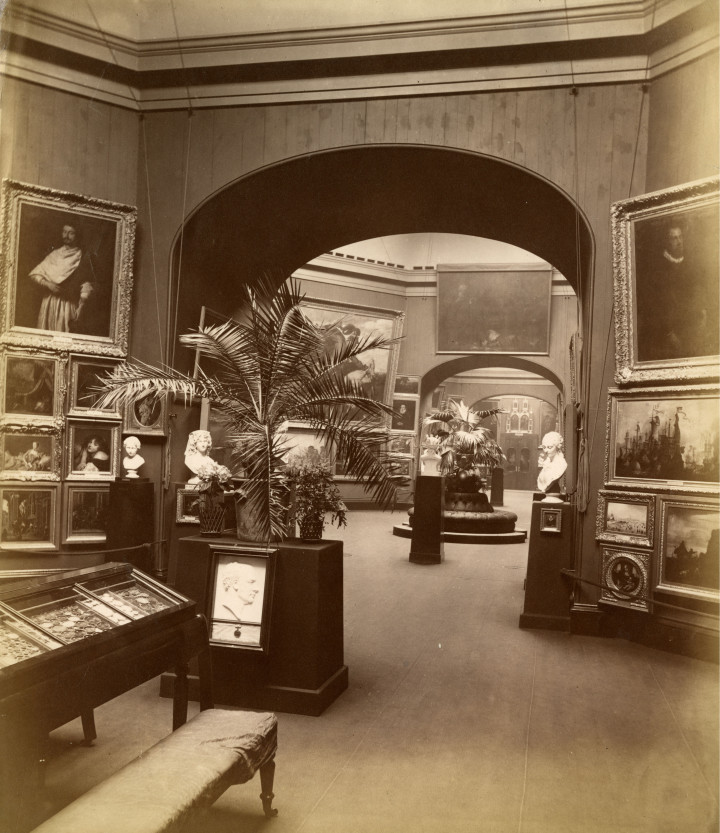 35th Annual Exhibition, 1861. Courtesy of the RSA
1910
After refurbishment of the former Royal Institution building by a 1910 Order of Westminster (and following The National Galleries of Scotland Act 1906), the Academy is given a permanent home, with occupancy rights for administration offices and exhibition galleries in the newly renamed Royal Scottish Academy. In recognition of this, and as part of the agreement, the Academy transfers another significant body of valuable works from their own collection to the National Galleries of Scotland.
 Kate Downie RSA, View of RSA building, 2025. Courtesy of the RSA
1941
During WWII and the 1941 annual exhibition, the Academy gives over a room to 40 Polish soldiers who are artists-in-exile in the UK. This leads to a particularly supportive review in The Scotsman with the intimation that this will be the first opportunity in a lengthy partnership between the nations. This did indeed herald a new outlook of internationalism for the Academy and, following the war, the Academy steered ahead in making European connections. In 1948, the Academy shows its first international exhibition for the Edinburgh Festival, Pierre Bonnard and Edouard Vuillard, touring from the Arts Council of Great Britain. This development resulted in many subsequent exhibitions by significant international artists and a continued connection with Europe through travel awards and bursaries such as the RSA John Kinross Scholarship. In the 21st century, there has been a reconnection with Poland and its artists through dialogue with the Consulate General of the Polish Republic in Edinburgh and contacts made via Prof Richard Demarco HRSA and the Adam Mickeiwicz Institute, Warsaw.
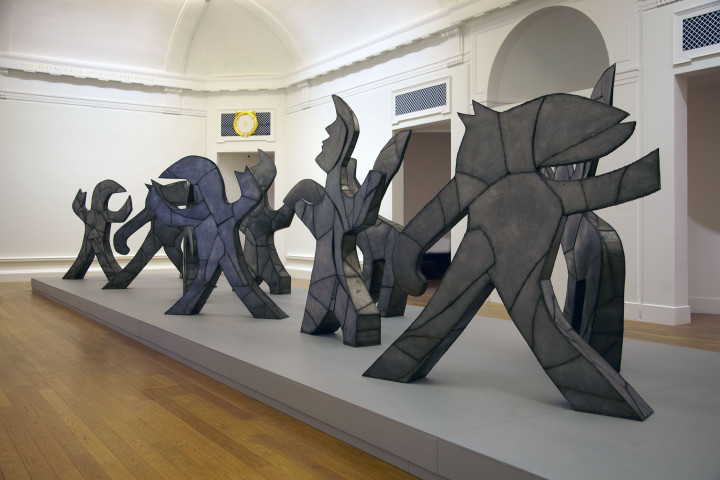 Magdalena Abakanowicz, King Arthur’s Court, part of 10 Dialogues. Courtesy of the RSA
1973
Sir William Gillies PPRSA bequeaths his estate to the Academy. Already having numerous significant bequests, the Academy invests the proceeds of the estate and establishes the RSA Sir William Gillies Bequest. Subsequent bequests follow and their investment portfolios continue to assist the Academy to support and promote Scottish art and architecture to this day, including, most recently, the RSA Blackadder Houston Bequest. The investment portfolios, alongside the Academy’s ability to earn income, enable it to remain as an independent and self-financing charity.
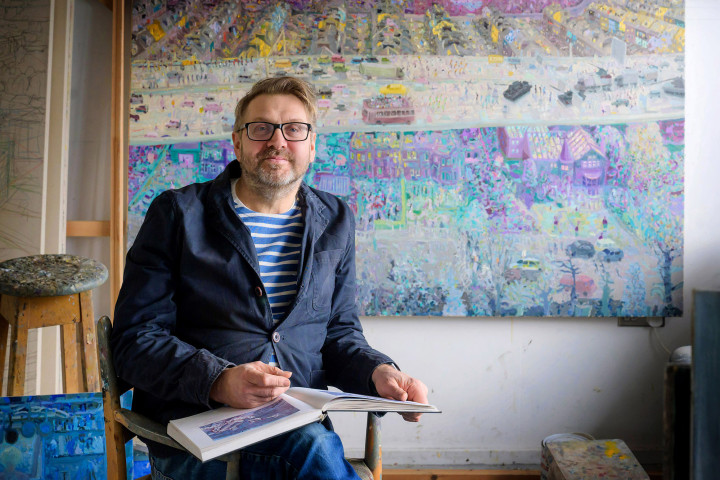 Robbie Bushe RSA. 2023 recipient of the RSA Blackadder Houston Mid- Career Painting Award. Photo © Helen Pugh. Courtesy of the RSA
1987
The Academy presents the Saatchi Art of Our Time exhibition in Edinburgh which includes Anselm Keifer, Susan Rothenburg, Andy Warhol and Richard Wilson to name but a few. This ground-breaking show spurs the Academicians to imagine the future of the Academy and how to revitalise its importance for the approaching 21st century.
 Richard Wilson, Installation shot, Gallery VIII, Art of Our Time exhibition showing Richard Wilson’s work 20:50, 1987. Courtesy of the RSA
2003
The Academy returns to The Mound after the three-year refurbishment of the RSA galleries. The Academy commissions a review ‘Changing Landscapes’ which seeks to revitalise and reorder its activities for a 21st century audience. The resulting discussions pave the way for a new vision for the Academy and a reworking of its constitution. This saw a tweak of name to The Royal Scottish Academy of Art & Architecture and enabled fine artists in all media to be elected as Members. The former Associate status for new Academicians was removed and elevation to full Academician is now no longer capped nor a lengthy process. The inaugural exhibition of this new spirit is a retrospective of works by American abstract expressionist, Helen Frankenthaler HRSA. The Academy has continued to review and expand on its opportunities for artists, now disbursing in the region of £500,000 annually.
 Helen Frankenthaler poster, 2003. Courtesy of the RSA
2009
From the earliest beginnings of teaching life drawing in the 1830s, through to the Life School at Edinburgh College of Art and the subsequent Student Competition and travel prizes, the RSA Student Exhibition was developed in 1974. In 2009, this project was refocused towards new graduate practice and exhibitors were invited by personal selection from the Scottish degree shows. RSA New Contemporaries has become the most important platform for new graduates to showcase with their peers from across Scotland. Eagerly awaited by all, the energy of this exhibition cuts an impressive swathe into our annual calendar and many rising stars of the art world find their feet here. Also in 2009, the RSA Residencies for Scotland programme launches with a supportive web of residency funding and opportunities for artists with partner venues across the country.
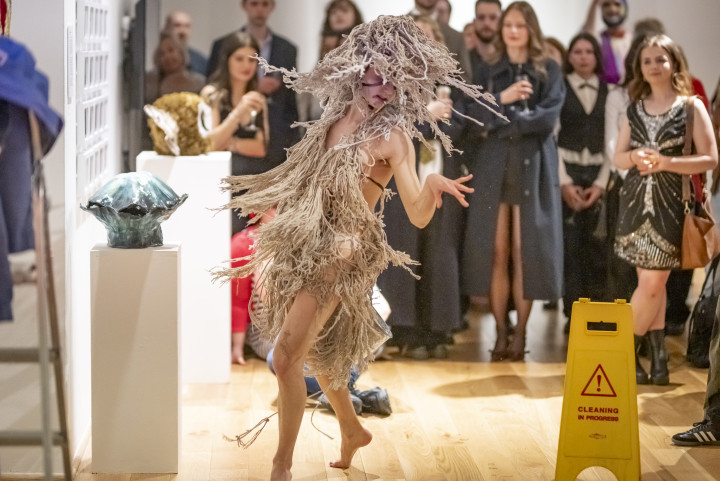 Academy Late 2025. Performance by Ellis Ludlow during New Contemporaries 2025, photo Andy Catlin. Courtesy of the RSA
2026
The Academy celebrates its bicentenary with more than 100 partners across Scotland. With exhibitions and events happening over the entire year, this project will be the largest celebration of Scottish art ever presented. Details of our gallery programme, including a new overview exhibition with Joyce W Cairns PPRSA – our first female President – and also an exhibition by Dame Barbara Rae RA RSA (following in the Antarctic footsteps of Sir Ernest Shackleton) can be found alongside our partner venues programmes at our website.
..jpg) Birthday celebrations begin in the gallery. Artwork Ross Sinclair RSA (Elect). Courtesy of the RSA
Birthday celebrations begin in the gallery. Artwork Ross Sinclair RSA (Elect). Courtesy of the RSA
Find full details of the Academy’s bicentenary programme at royalscottishacademy.org/rsa200


