
Scottish Art News
Latest news
Magazine
News & Press
Publications
Interview: Katie Paterson
By Susan Mansfield, 28.07.2026
 created in collaboration with architects zeller & moye, at collective gallery, edinburgh © eoin carey25.jpg)
Katie Paterson is a master of the Big Picture. Big like the distance from Earth to outer space, or the timespan from the Big Bang to the end of the universe. The Scottish artist is now internationally recognised for her work with cosmology, deep time and the environment, taking almost imaginably big concepts and creating works which make them graspable, and often beautiful.
Arguably, Afterlife, at Collective for the Edinburgh Art Festival, does that 197 times. Paterson has taken amulets from many cultures, from Mesopotamian and Egyptian to Viking, Aztec and Inuit, 3D-scanned them and refashioned them, each in a different material which reflect the planet’s fragility: coral from the Great Barrier Reef, charcoal from the ashes of a rainforest, microplastics recovered from the deepest ocean trenches. Like many of Paterson’s works, it’s so ambitious it sounds almost impossible, except that - after years of research and collaboration with specialists around the world - she’s managed it.
 created in collaboration with architects zeller & moye, at collective.jpeg) Afterlife, Katie Paterson (2026) created in collaboration with architects Zeller & Moye, at Collective
Afterlife, Katie Paterson (2026) created in collaboration with architects Zeller & Moye, at Collective
 created in collaboration with architects zeller & moye, at collective gallery, edinburgh © eoin carey13.jpg) Afterlife, Katie Paterson (2026) created in collaboration with architects Zeller & Moye, at Collective Gallery, Edinburgh © Eoin Carey13
Afterlife, Katie Paterson (2026) created in collaboration with architects Zeller & Moye, at Collective Gallery, Edinburgh © Eoin Carey13
Paterson says the process was akin to making 197 individual artworks, each with its own process and timeframe. “It began with a fascination for ancient amulets and the role they have played across human history. These small, intimate objects were carried as protective talismans, imbued with deep cultural, spiritual and cosmic significance. I wanted to connect that tradition with our urgent contemporary need to protect the planet’s disappearing ecosystems and collapsing biodiversity.”
Afterlife was commissioned for the Folkestone Triennial in 2025, curated by Collective’s director Sorcha Carey. The works are presented on bespoke tables designed by Berlin-based architects Zeller & Moye and made in Scotland by Silvan Studio. “The project gradually expanded into a kind of future archaeology - a collection of amulets carrying fragments of our world. By transforming vulnerable materials into intimate, tactile objects, I hope the work encourages us to reflect on how we might foster a more reciprocal relationship with the living world,” describes Paterson.
Afterlife might be one of the artist’s most explicitly environmental projects. Encountering objects made from plastics recovered from the stomach of a baby albatross, 1000-year-old rocks deposited by melted glaciers and even space junk from the Earth’s atmosphere, one faces up to the impacts of human life on the planet one amulet at a time. Yet, the forms suggest there is more to this than a lecture on ecology.
“I didn’t want to make a work that simply illustrates the environmental crisis. I’m more interested in creating an emotional connection with these places, species and materials. By bringing them into an intimate, human scale, I hope people look closely, reflect on the stories they hold, and perhaps consider our own place within those much larger systems. The work comes from a place of ‘futurist mourning’- grieving not only what has already been lost, but what may yet disappear. But it’s also about care, hope and the possibility of imagining a different relationship.”
Paterson grew up in Glasgow and studied at Edinburgh College of Art, but says it was spending eight months in Iceland after her graduation that switched her on to cosmology. In a landscape where the bones of the Earth are laid bare, the experience “tilted me on my axis and set me on a path of exploring how to tell the story of deep time through art”. She went on to do a Masters at the Slade, where her work included Vatnajökull (the sound of), a mobile phone embedded in an Icelandic glacier: visitors to the show could dial the number and listen to the sound of the melting ice.
It was, quite literally, a connection to the wider world, and many of the works she has made since have sought suggest similar imaginative connections: a disco ball made from images of every solar eclipse ever recorded, a necklace of fossils going back 170 million years, a spinning colour wheel which features all the colours in the universe from the Big Bang (sky blue) to the death of the universe (deep orange). The present day, by the way, is a pale brown, dubbed “cosmic latte” by scientists. Paterson says she’s interested “creating experiences that encourage wonder, reflection and long-term thinking”.
Works begin life as short, haiku-like phrases, a library of ideas which is itself an artwork. A sound installation drawing from it will occupy the roof garden at the Southbank Centre in London from September with the ideas voiced by the DJ Mary Anne Hobbs. Some ideas are then are realised as art projects. Paterson says it starts with “thinking and imagining, a little bit of daydreaming - and then dealing with how to make it all happen afterwards”. The “making it happen” stage can involve collaborations with experts from astrophysicists to paleontologists, lighting engineers to perfumers.
She says climate change and the environment are becoming increasingly important strands in her work. “Looking through the lens of deep time inevitably changes how you see the present. Human history becomes incredibly brief, while the speed at which we’re transforming the planet feels all the more extraordinary. I’ve always been interested in our place within much larger systems of time and nature, and many of my works invite people to think beyond the timescale of a single human life. As the environmental crises have deepened, those questions have become increasingly urgent.”
The work for which Paterson is best known is Future Library, launched in Norway in 2014, and set to run for 100 years. Every year, a leading writer is invited to submit a story which will be kept under lock and key in a specially designed room in the Public Library in Oslo until 2114 when they will be printed on paper derived from a forest which was planted when the project began. The announcement of each new writer is now a public event, happening this year on the closing weekend of the Edinburgh International Book Festival. Paterson says her own feelings about the project have shifted as she has seen it develop. “When we planted the forest in 2014, a hundred years felt almost unimaginable. Now, the project feels very different. The trees have visibly grown, the manuscripts continue to accumulate, and what once felt like a distant idea has become something living and tangible. In many ways, Future Library has taken on a life of its own. It no longer feels like my project alone - it belongs to the writers, the foresters, the readers of the future, and everyone who has cared for it along the way.
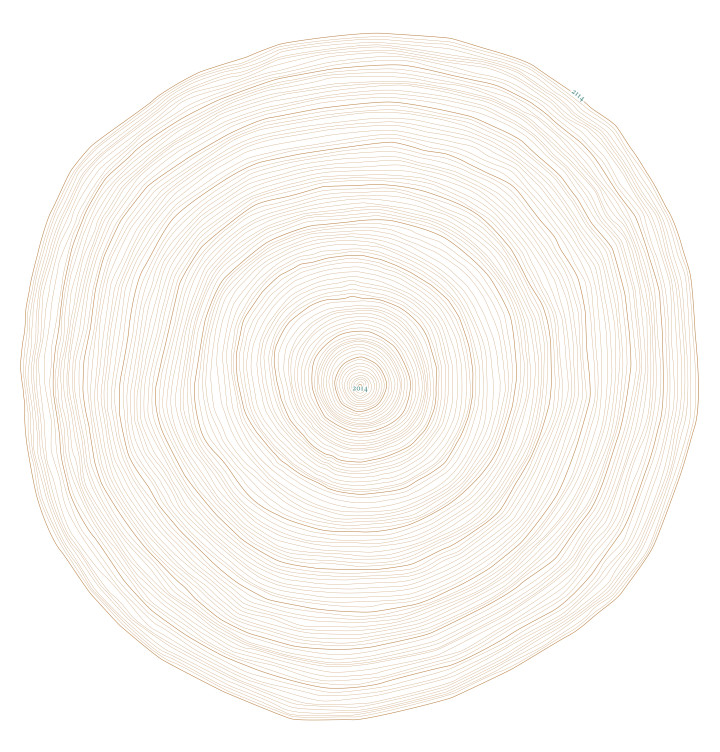 Katie Paterson. Future Library Certificates.
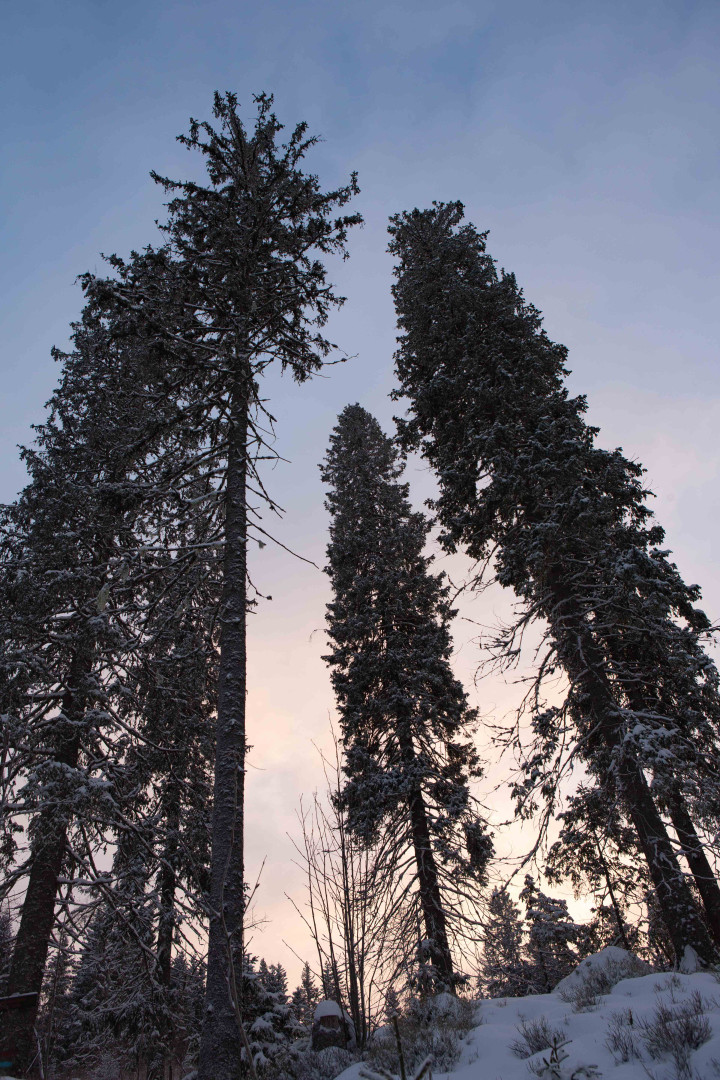 Future Library. Kristin-von-Hirsch (2021).
“It’s taught me a great deal about patience, trust and thinking beyond my own lifetime. Every year another author contributes a manuscript they’ll never see published, and every year the forest quietly continues to grow. I find that incredibly moving. I hope it continues to remind us that some of the most meaningful things we do are acts of faith in people we will never meet.”
Her work is often about the things which connect us rather than divide us, and a new work for her forthcoming solo exhibition at UCCA Dune in Aranya, China, focuses on a new element (for her), water. Vapour is an immersive installation that brings together water gathered from across the Earth, transformed into “a single cloud of fog that visitors can walk through, breathe in and become immersed within”.
“I’ve been collecting these waters over several years. It’s taken me from glaciers and cloud forests to sacred wells, holy sites and remote springs, collecting waters that each carry their own geological, ecological and cultural histories. By bringing them together into a single atmosphere, the work explores water as a universal substance that connects landscapes, people and deep time.”
Katie Paterson: Afterlife is at Collective until 6th September and is presented as part of Edinburgh Art Festival between 14th—30th August 2026.


