The Cattle Fence
William Gillies


DESCRIPTION
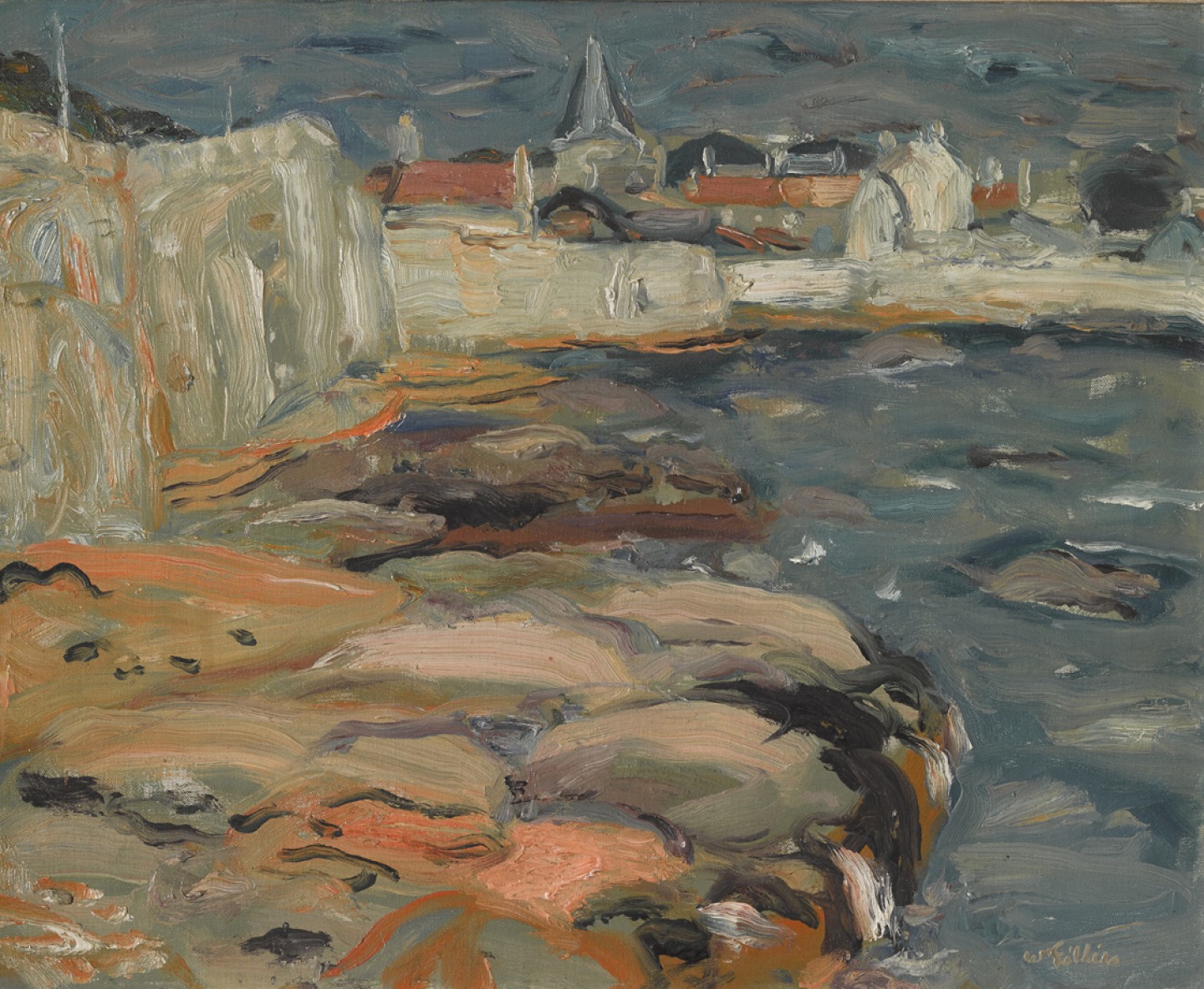
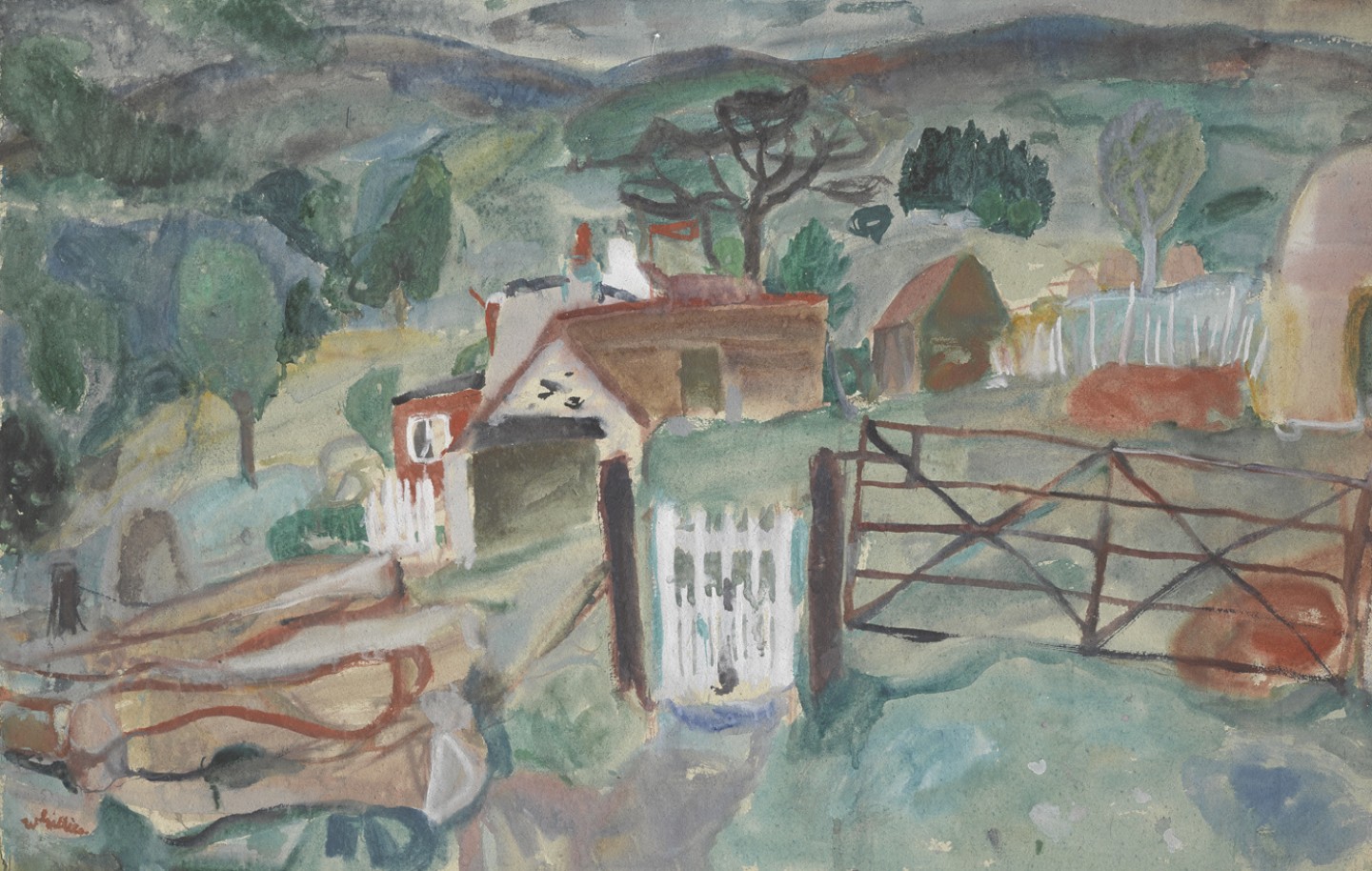
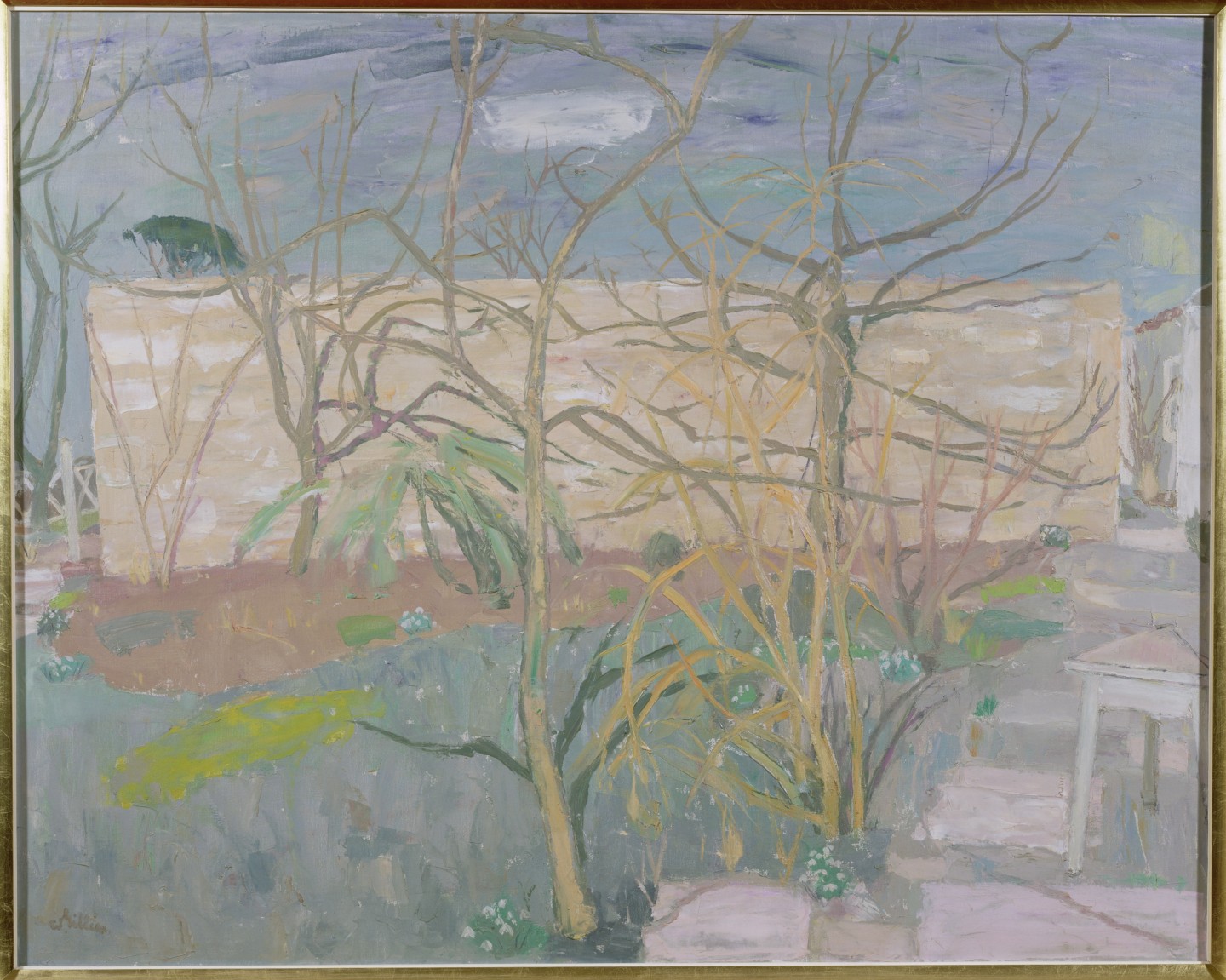
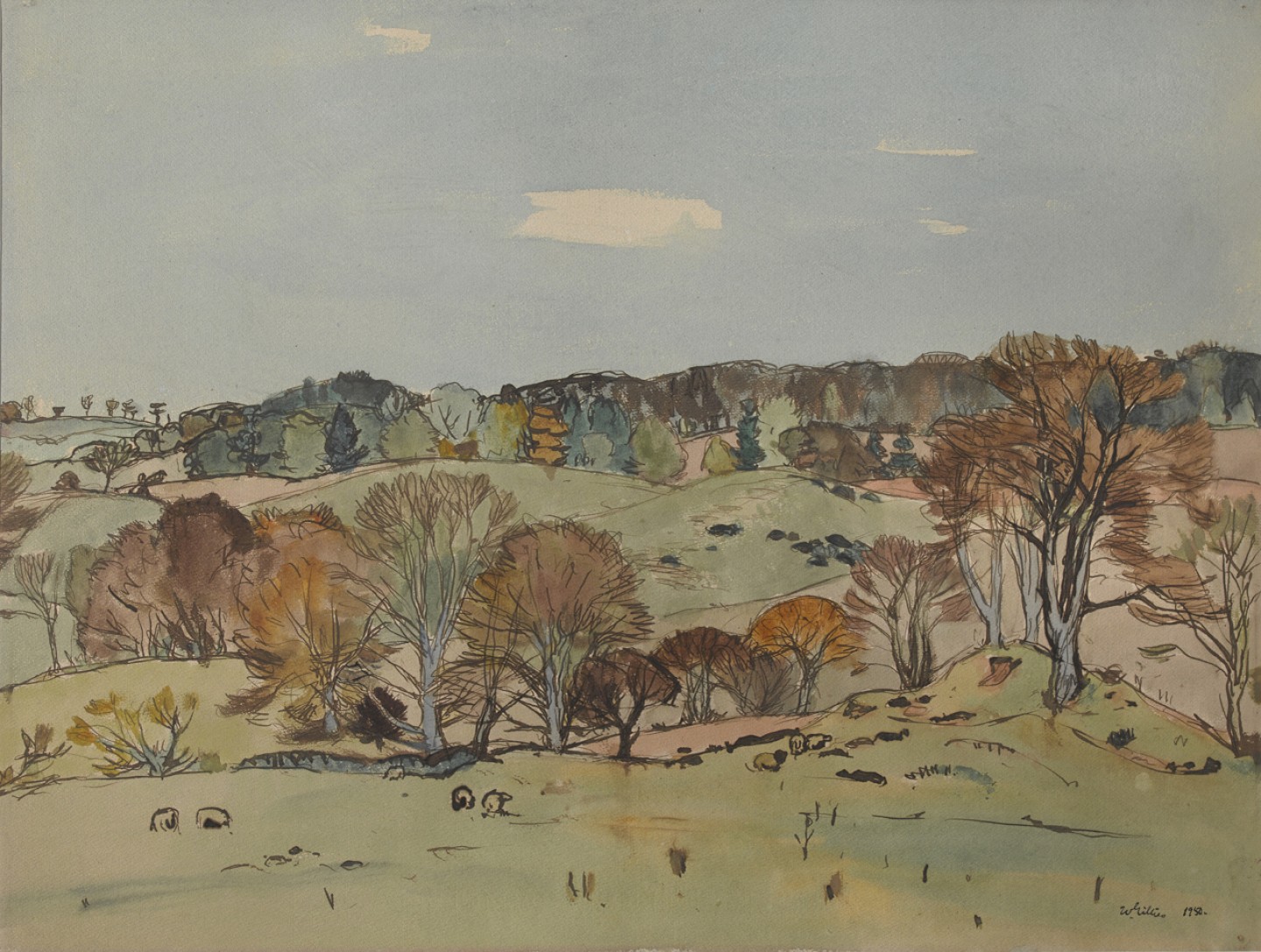
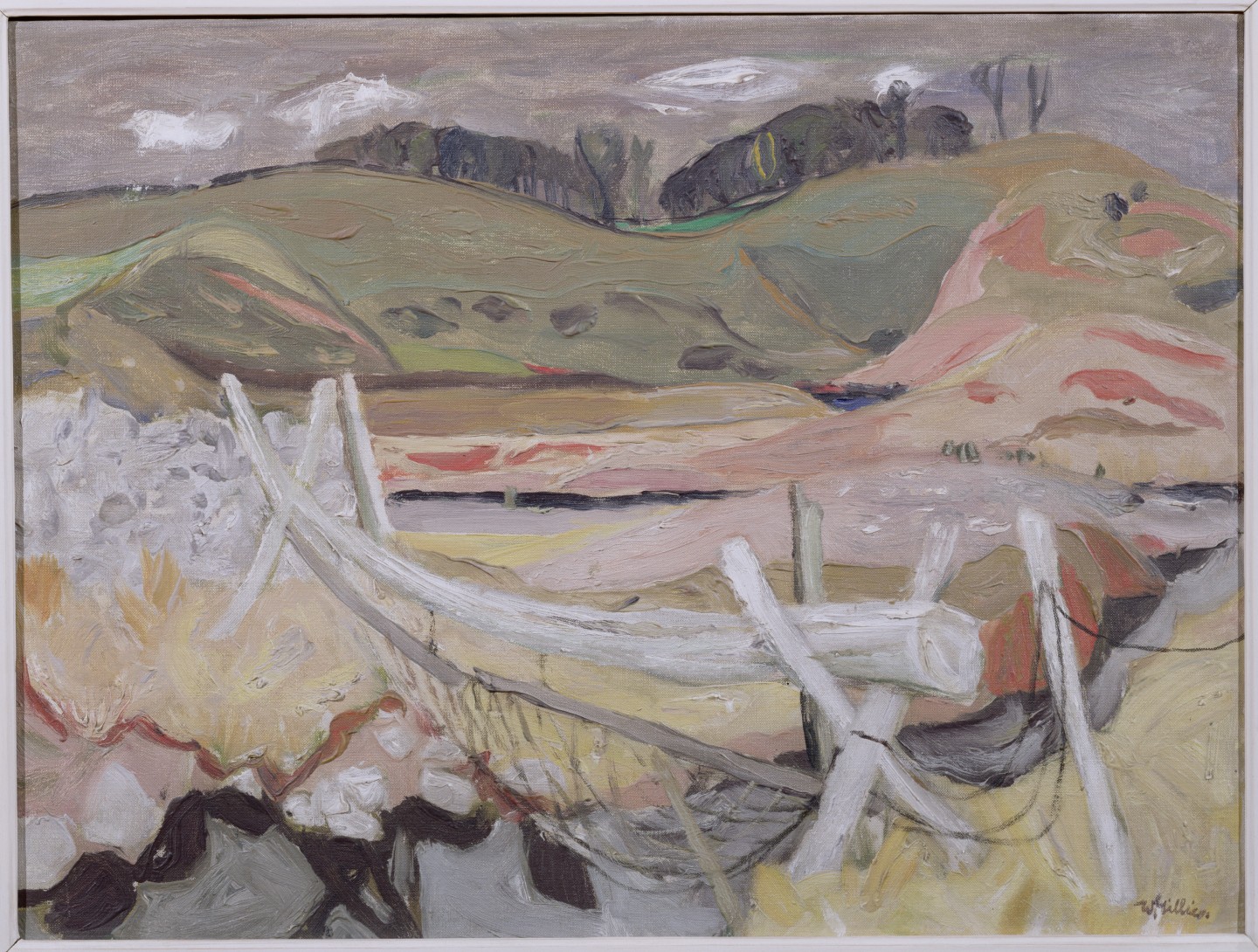
The Cattle Fence by William Gillies (1898-1973) captures a wooden log fenceline in the foreground against loosely captured rolling hills of pink and green colour, with a dark green treeline in the background against a greyish brown sky. Gillies uses thick strokes of oil paint throughout this work to create the impression of hills with limited depth in the work. The most detail present in the piece is in the foreground, with the cattle fence having thinner strokes of paint to capture the lines of the wood and the rope making up the fence. The rope netting is over a grey creek, with thick, dark strokes of paint jutting out against the lighter, reddish brown edges of the land to create the water's edge. The muted tones of green against the brighter pink and red colours of the hills creates a moody and contemplative atmosphere throughout the piece.
The vibrant colour palette and juxtaposition of colour in this piece reflects Gillies's role as a colourist painter. The blockiness of the hills with these solid patches of colour and how it creates a flatter perspective also reflect residual influences of cubism from learning under André Lhote in Paris. The layering of different vibrancy of colour shows Gillies's technique as a water colourist coming across in this oil painting, as wide strokes of colour build up the overall tone of the landscape.
DETAILS
-
Artist
William Gillies
-
Date
Unknown
-
Medium
Oil on canvas
-
Object number
376
-
Dimensions unframed
46 × 61.5 cm
-
Dimensions framed
59.5 × 74.5 × 3 cm
-
Marks
Signed bottom right
-
Subject
-
Copyright
Ⓒ Royal Scottish Academy. All Rights Reserved 2019/Bridgeman Images
ARTIST PROFILE
Sir William George Gillies RA RSA PRSW, 1898-1973
Gillies was born in Haddington, East Lothian. His training at Edinburgh College of Art between 1916 and 1922 was interrupted by two years' war service in France. He and William MacTaggart were among the artists who formed the '22 Group, exhibiting at Edinburgh's New Gallery between 1923 and 1928. Awarded a travelling scholarship, Gillies studied in Paris with André Lhote in 1923-24 before visiting Italy. In 1926 he took up a part-time position under David Alison at Edinburgh College of Art, where he became Head of Drawing and Painting in 1946. He was principal from 1960 to 1966, exerting a powerful influence on the younger generation on painters. Gillies worked in oil and watercolour, but it is as a watercolour painter of Scotland's landscape - particularly Lothian and the Borders - that he is best remembered.