Little Sanctuary
Anne Redpath


DESCRIPTION
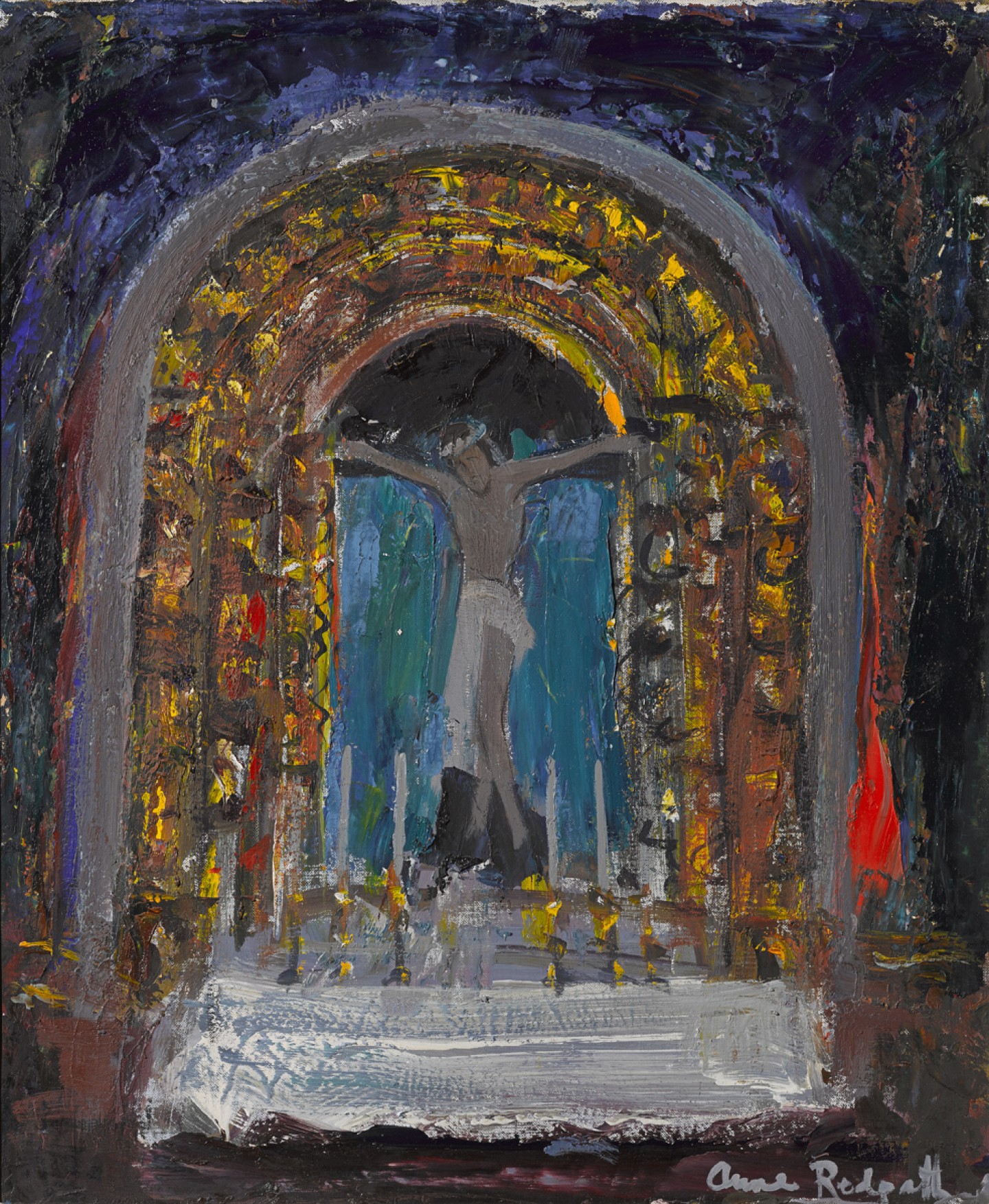
Little Sanctuary by Anne Redpath (1895-1965) captures an altar scene, where there is a white clothed table with candles, against a background of what appears to be a stained glass window with the depiction of Christ on the Cross. Redpath builds up the rich colours in oil with wide, layered strokes of paint. The different layers vary slightly in colour, creating a textured appearance and a criss-crossing of colours that captures the stained glass in an abstract sense of detail. In contrast, the depiction of Christ on the Cross is much smoother, with singular tones of colour creating a stark contrast between the figure and the rest of the richness and textured elements of the work.
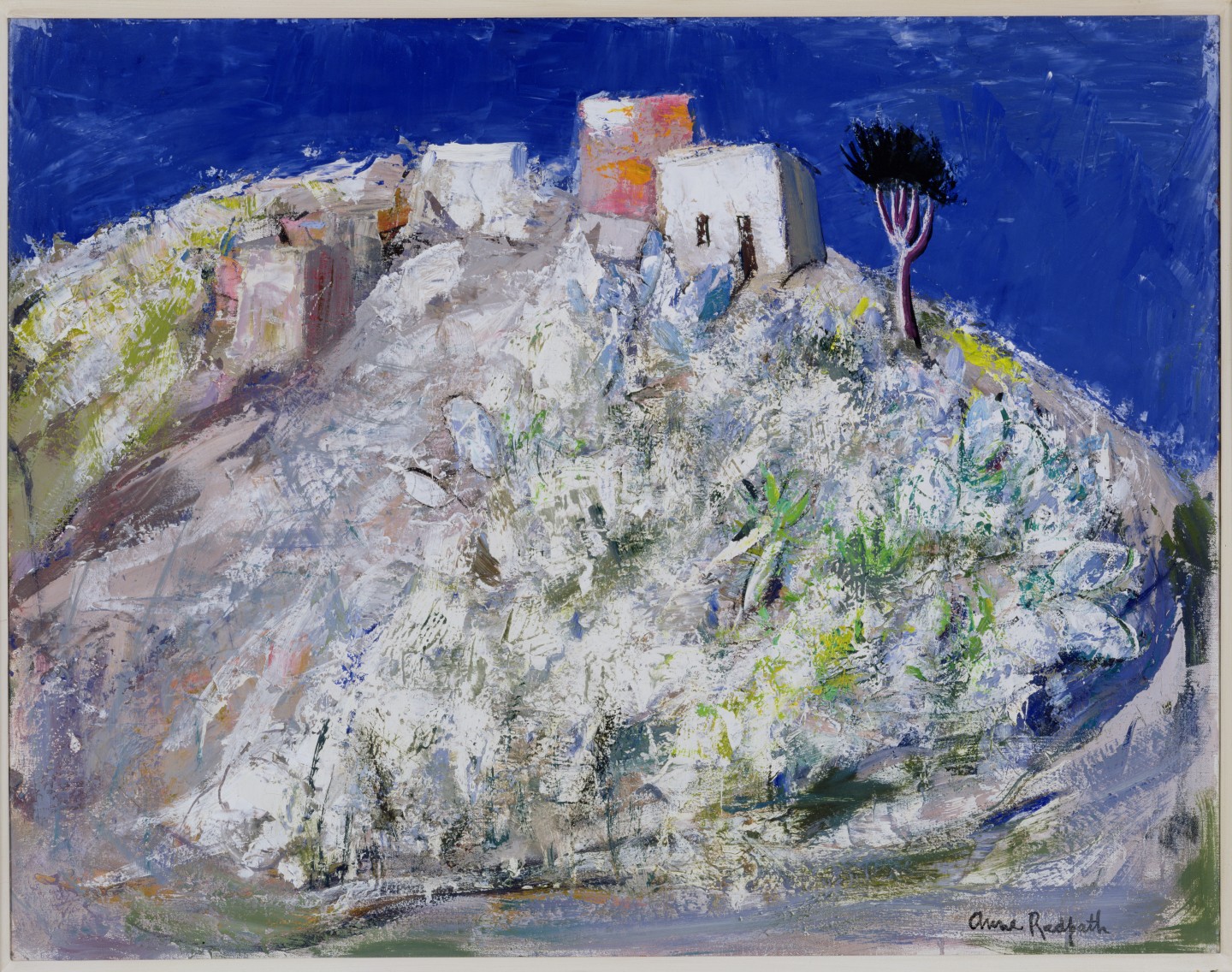
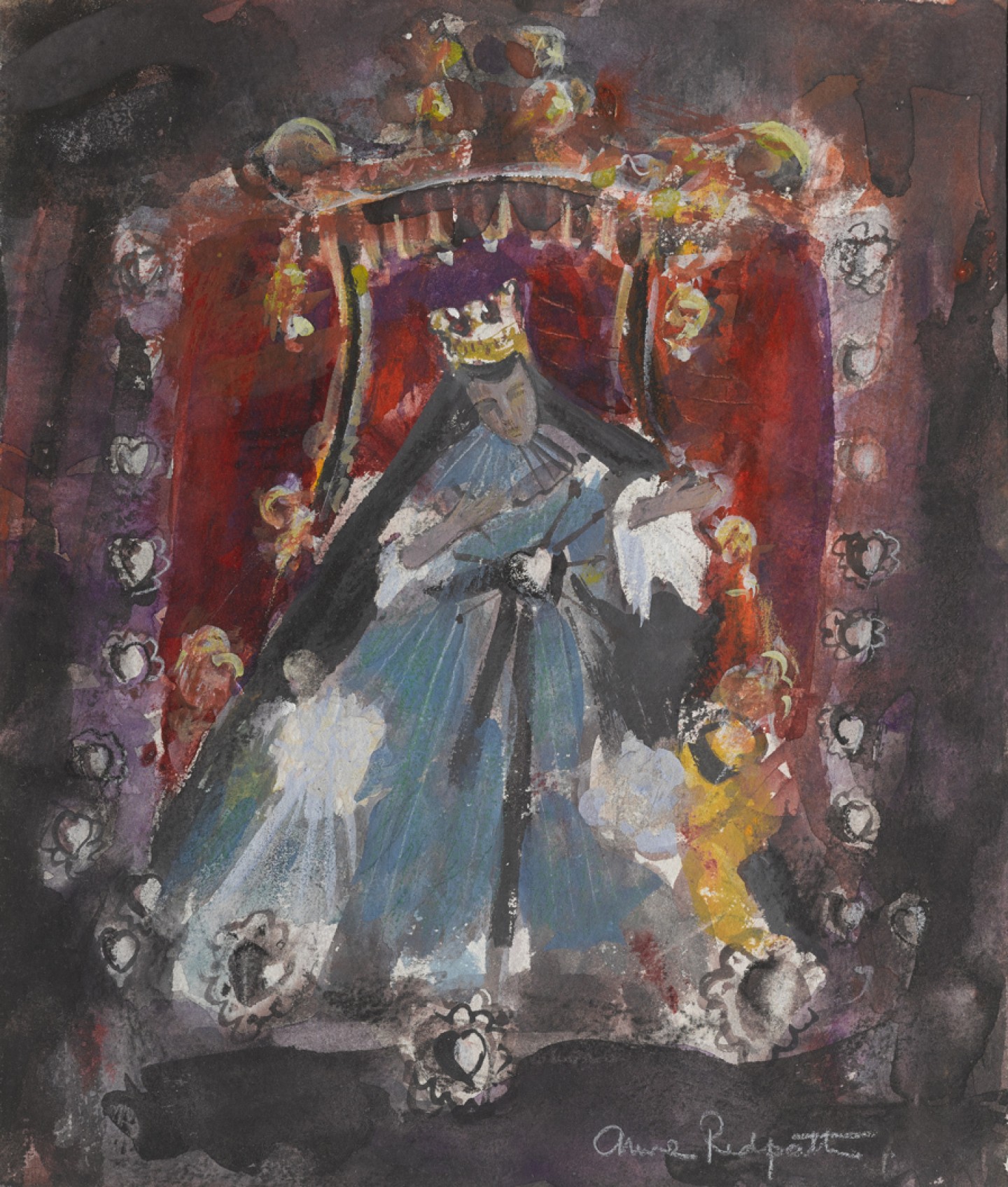
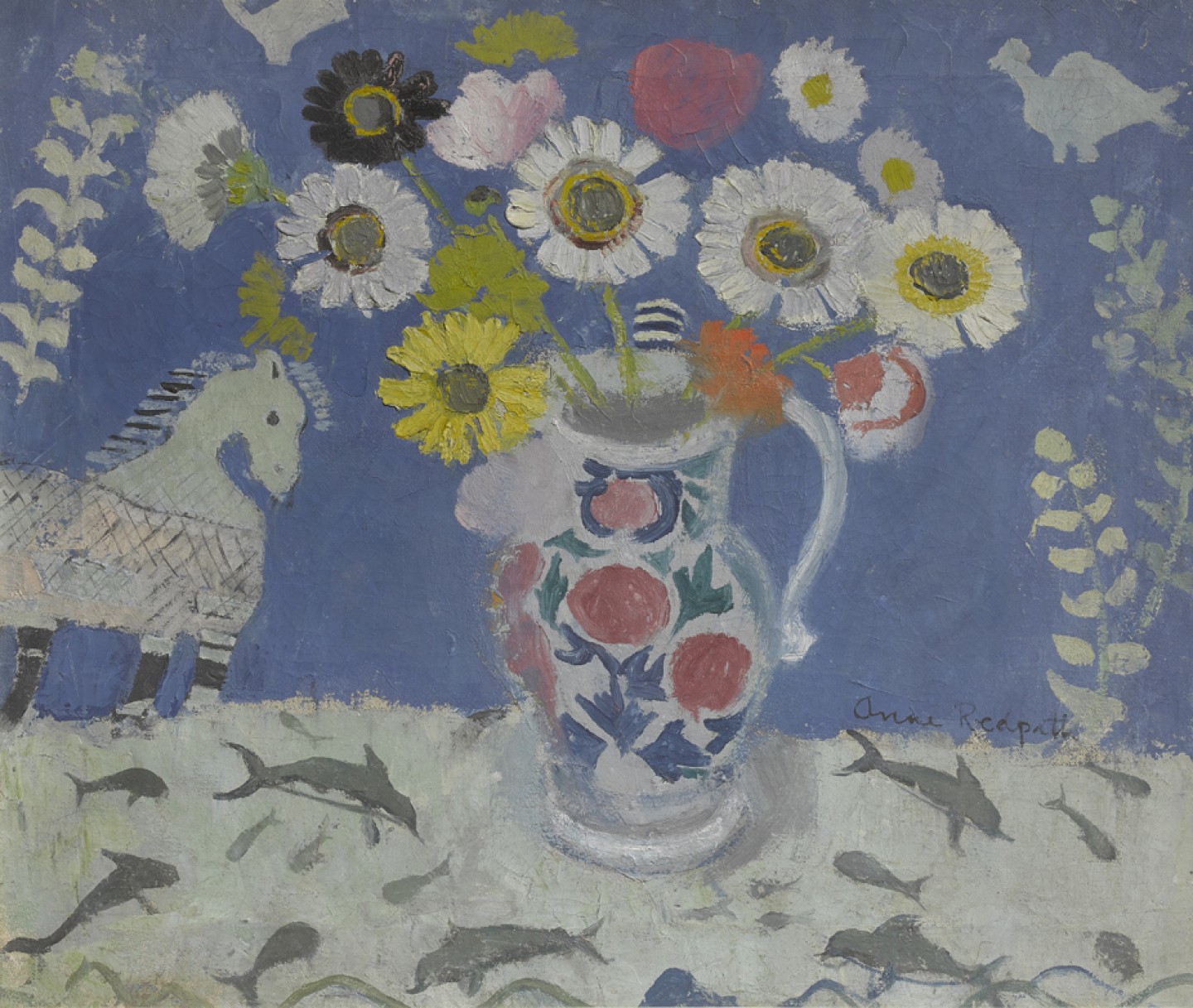
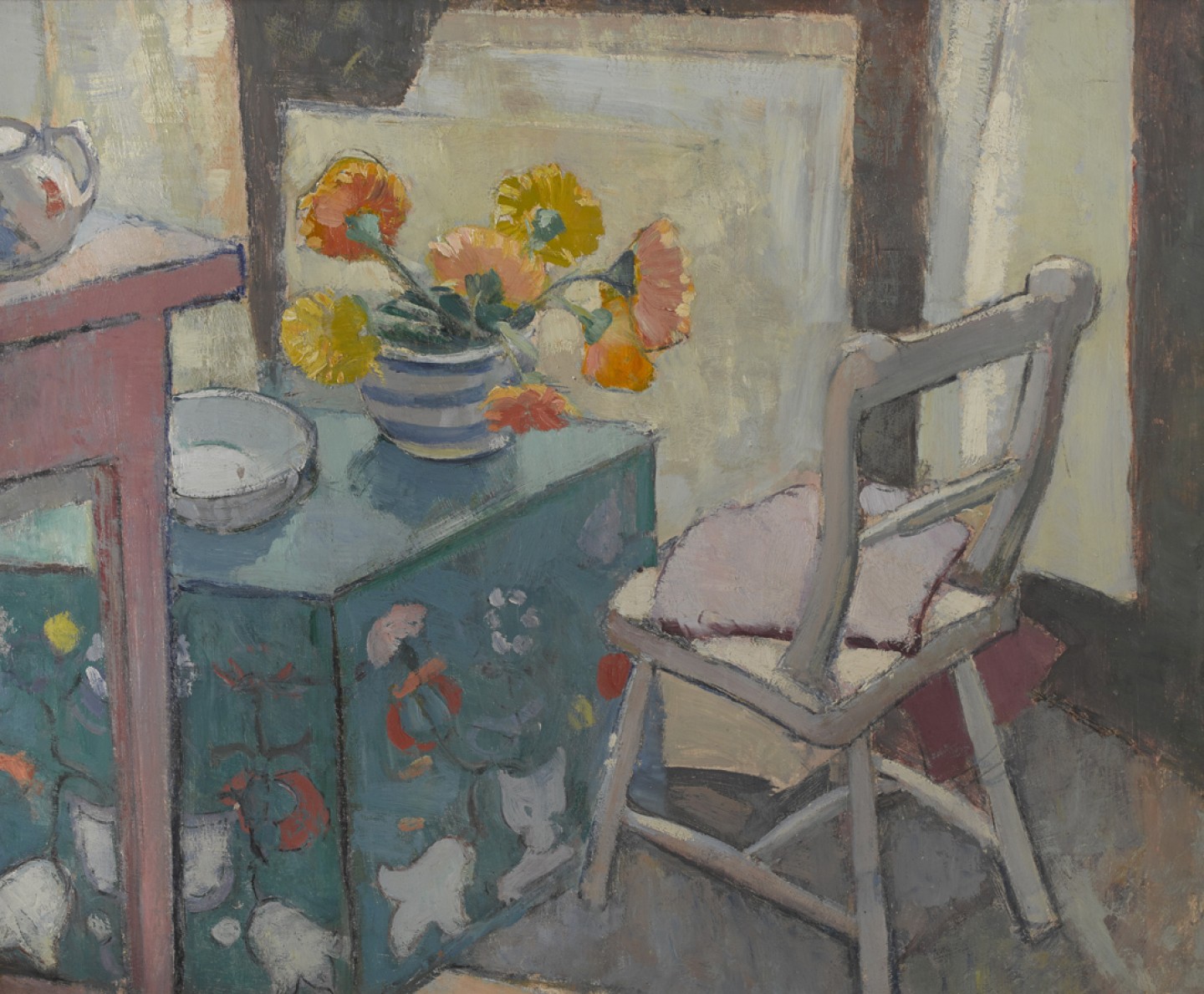
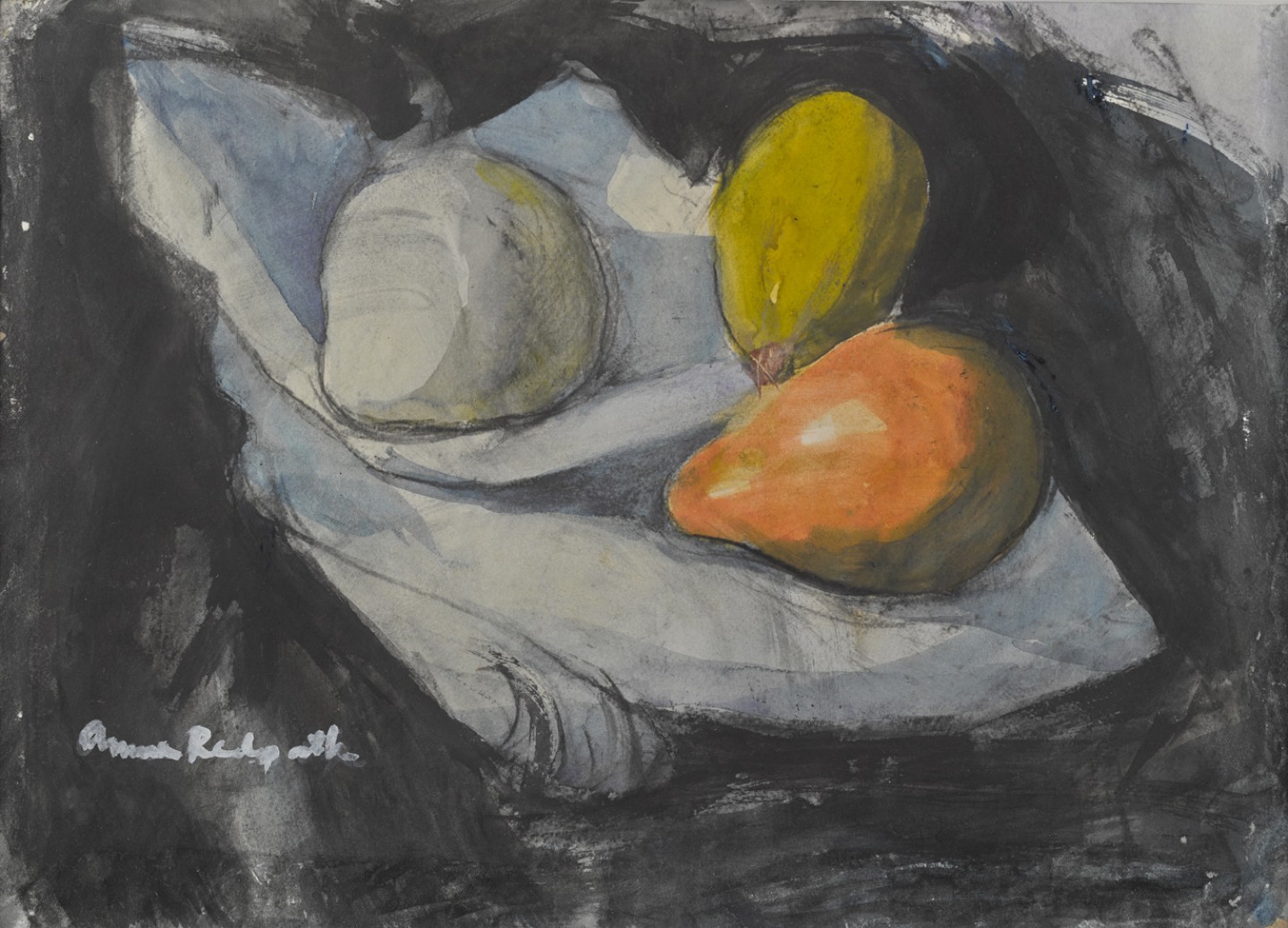
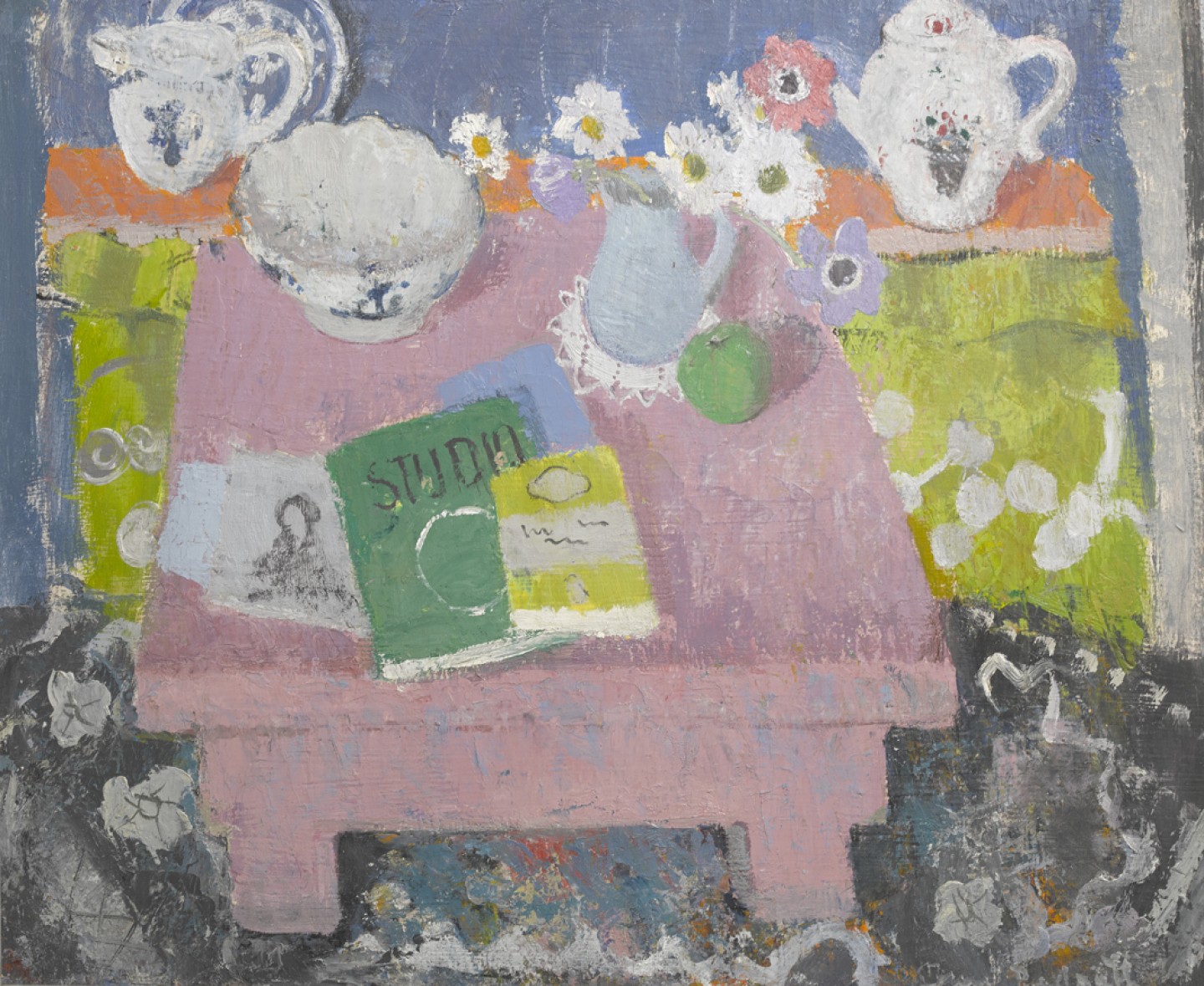
Redpath was well known for using vibrant colours, present here in the bright yellow, white, and blue in the piece, but also in the rich and bright red that pops out on the edge and the flecks reflected in the stained glass. The influence of her father with an interest in texture, similar to tweed, is present throughout this work in the way Redpath has created almost a woven-like background with layers of blue, black, and the yellow, red, and brown of the stained glass overlapping each other. The build up of oil paint as well combines with this influence to create the roughened texture, that also characterises tweed.
DETAILS
-
Artist
Anne Redpath
-
Date
1950s/1960s
-
Medium
Oil on canvas
-
Object number
801
-
Dimensions unframed
60 × 49 cm
-
Dimensions framed
80 × 69.5 × 5 cm
-
Marks
Signed bottom right
-
Subject
-
Copyright
Ⓒ The Artist's Estate. All Rights Reserved 2019/Bridgeman Images
ARTIST PROFILE
Anne Redpath OBE RSA ARA ARWS, 1895-1965
Born in Galashiels, the daughter of a tweed designer, Anne Redpath overcame initial parental opposition to the study of art on condition that she also trained as a teacher. In 1913 she enrolled at Edinburgh College of Aer, where she was taught by, among others, David Alison, Henry Lintott and D.M. Sutherland. The college awarded her a travelling scholarship in 1919, and Redpath went to Brussels, Bruges, Paris, Florence - where she lived for several months - and Siena, where she was impressed greatly by the work of the Sienese Primitives, particularly the brothers Lorenzetti.
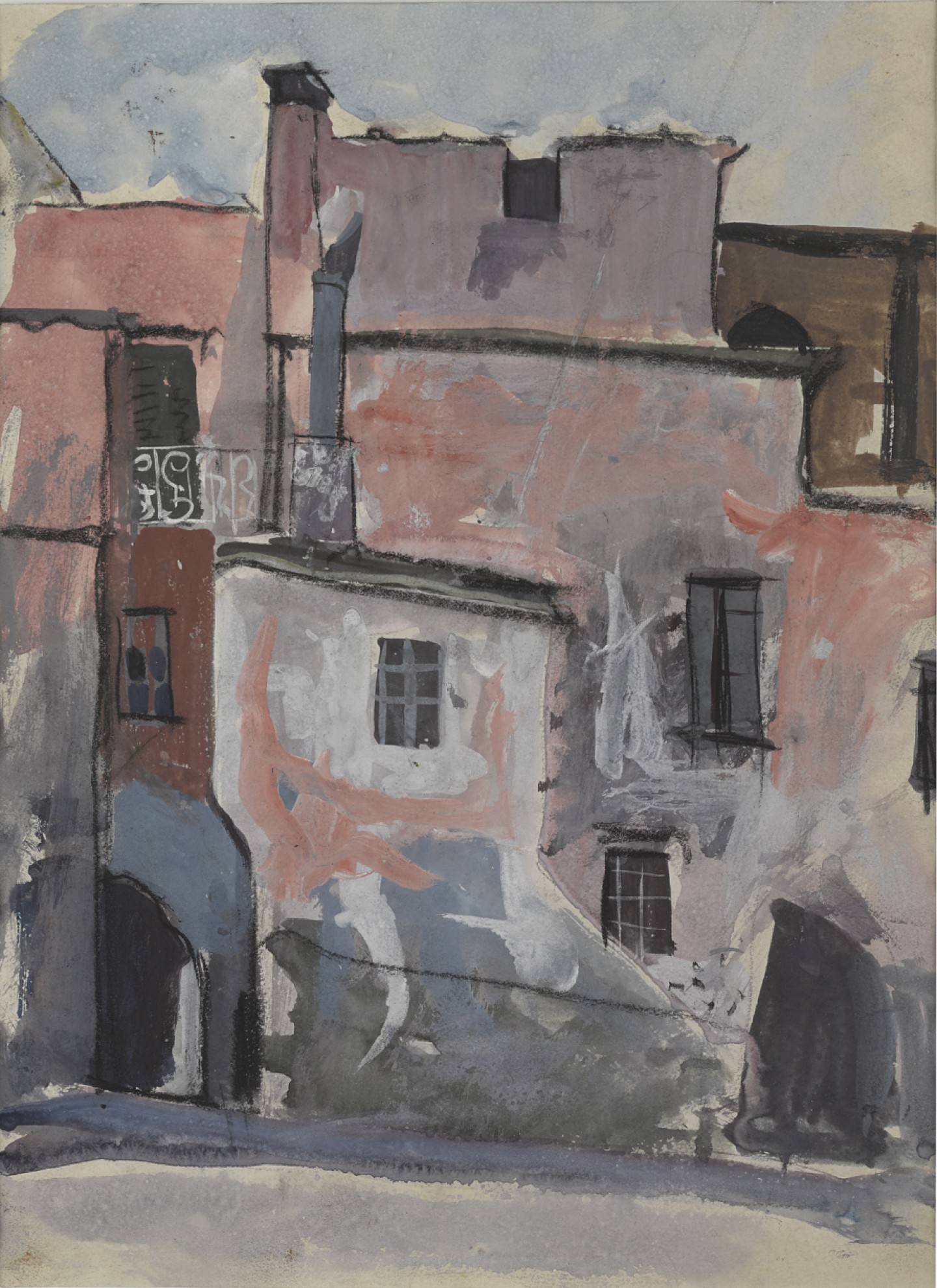
In 1920 she married James Beattie Michie, an architect with the war Graves Commission in France, spending fourteen years bringing up a family, first in northern France and then on the Riviera, painting whenever she could. She and her three sons returned to Scotland in 1934, living in Hawick, where she had been brought up. She moved to Edinburgh in 1949. On her return to Scotland she took up painting again in earnest, forced to earn a living from it. Until she travelled in Spain in 1951 her paintings were mainly still lifes and landscapes, but after that visit her art developed a new strength and drama, her handling of paint was much freer, and her work developed a more abstract quality.
Colour and texture fascinated Redpath. The influence of her father's work remained with her, as she observed in later life in an exhibition catalogue: "I do, with a spot of red or yellow in harmony with grey, what my father did with his tweed." In the last twelve years of her life she painted in Corsica, the Canary Islands, Portugal, Amsterdam and Venice. Serious illness in 1955 and 1959 seemed only to intensify the emotion with which she charged her canvas.
Redpath painted highly decorative works in which simple colour harmonies dominate. revealing the influence of the French post-Impressionist, in particular Gauguin, Matisse, Bonnard and Vuillard.