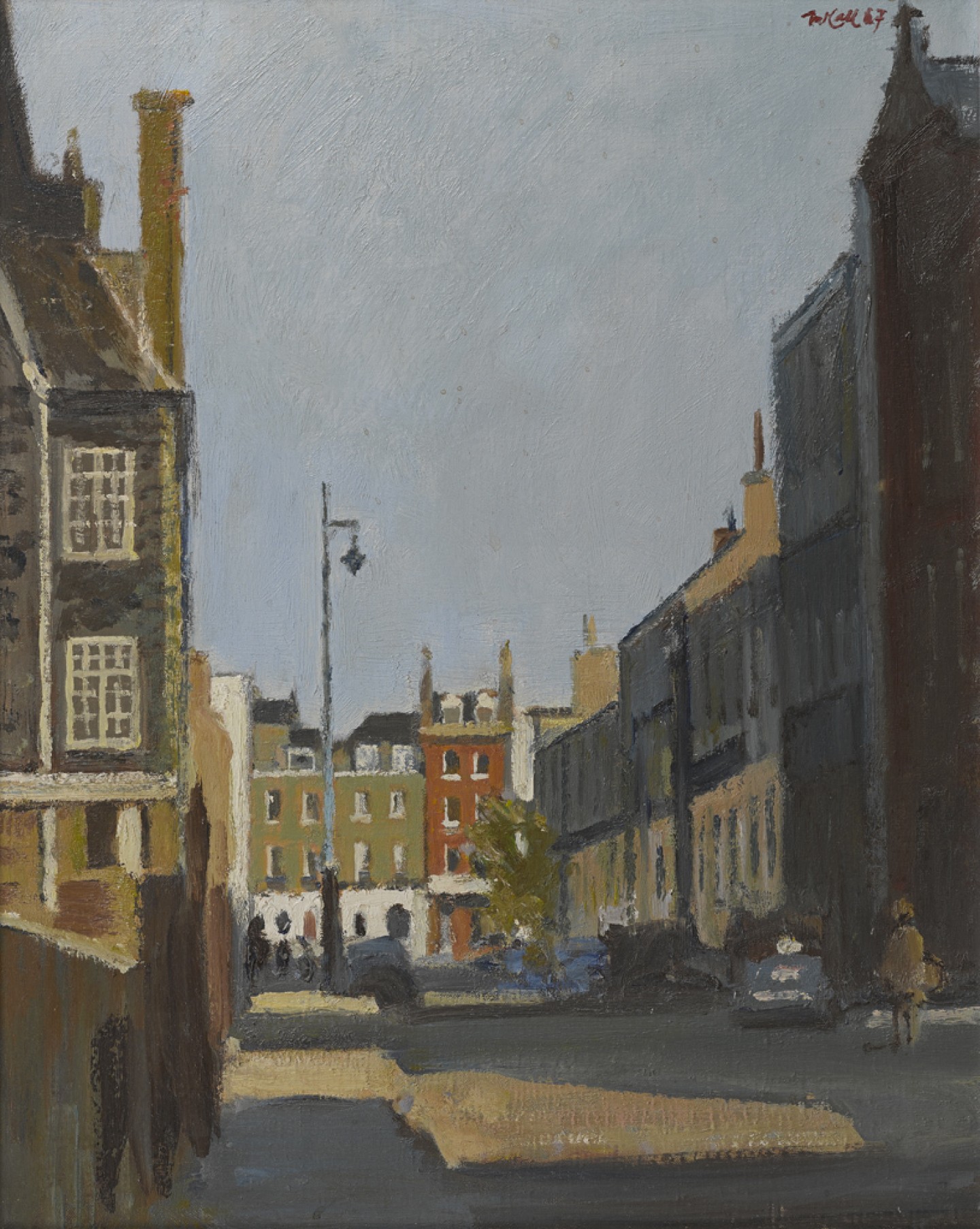
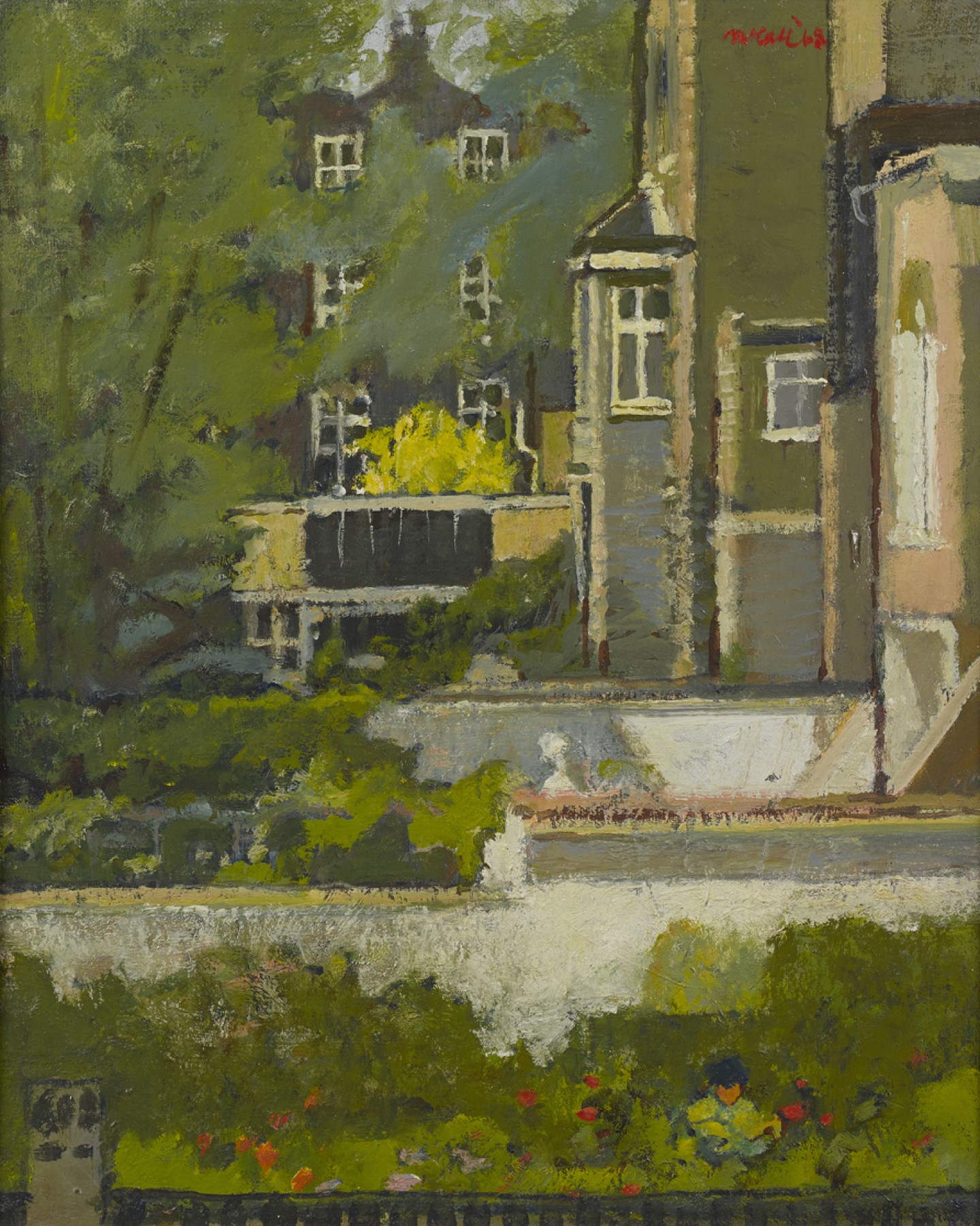
Gardens, Eaton Terrace
Charles McCall


DETAILS
-
Artist
Charles McCall
-
Date
Unknown
-
Medium
Oil on canvas on panel
-
Object number
567
-
Dimensions unframed
38.1 × 31.8 cm
-
Dimensions framed
46 × 44 cm
-
Place depicted
London (2643743)
-
Subject
-
Copyright
Ⓒ The Artist's Estate. All Rights Reserved 2019/Bridgeman Images
ARTIST PROFILE
Charles McCall, 1907-1989
Charles McCall was primarily an oil painter. His work is distinguished by a strong sense of colour, painterliness, and an awareness of French influences such as Vuillard. He began his education in Edinburgh. McCall first worked for a law firm while attending Edinburgh College of Art in the evenings. At the age of 23, he won a scholarship to the college, sponsored by his teacher D M Sutherland, and completed his diploma in two years rather than the usual four.
In the mid-1930s, he received a number of scholarships that allowed him to travel extensively throughout Europe. He was awarded a two-year fellowship in Edinburgh upon his return. McCall resumed painting after serving in the Royal Engineers during WWII, primarily on camouflage, and gradually built up an impressive series of one-man shows in England, North America, Canada, and Ireland. He was later a resident of London.