Daytrippers, Dunoon
David Sutherland


DESCRIPTION
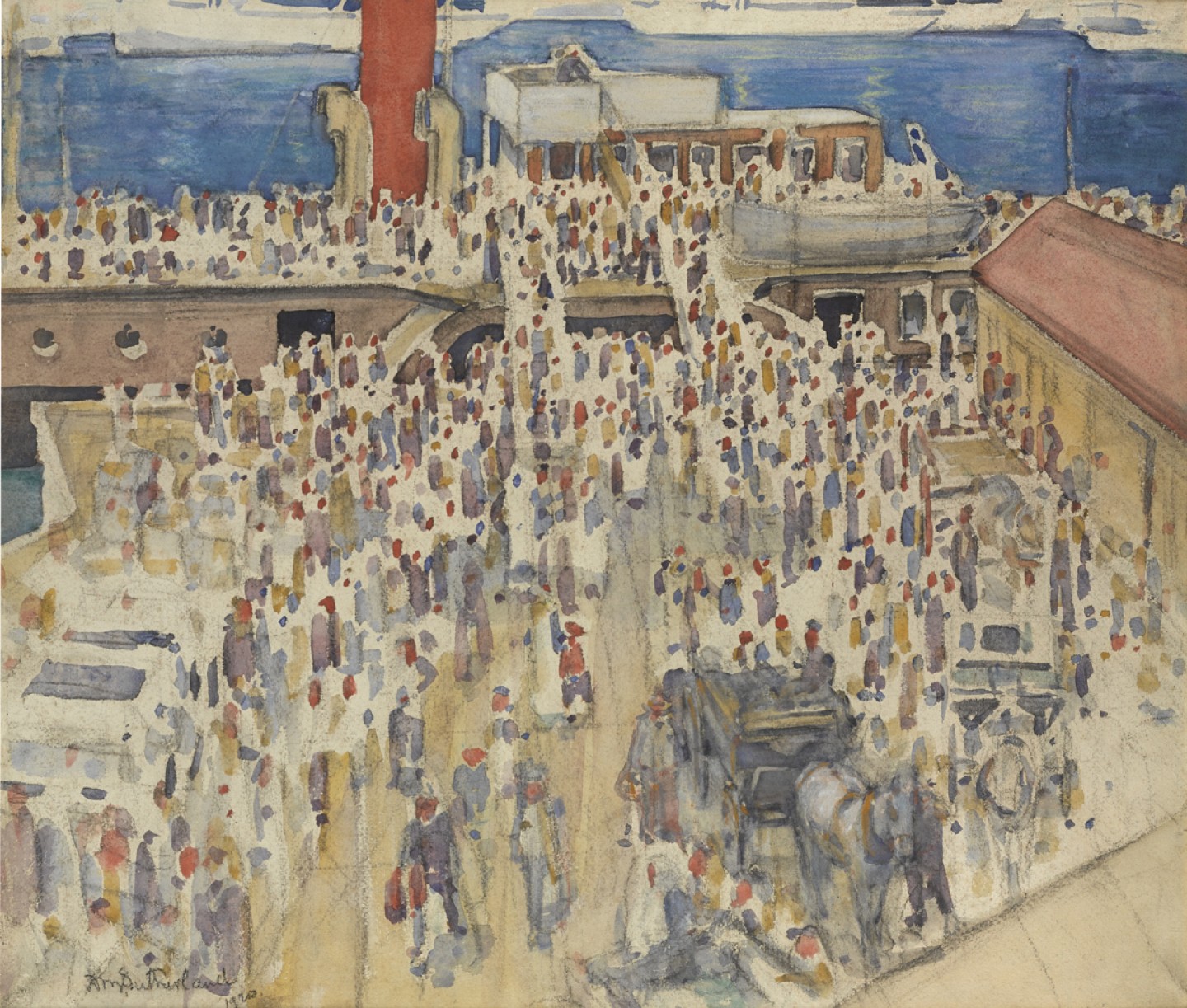
Daytrippers, Dunoon by David Sutherland (1883-1973) depicts crowds of people in gentle, rounded strokes of varying watercolour to capture their overall shape, as they board or disembark from a steam ship. Carriages pulled by horses are in the foreground, one horse remains partially unpainted showing the chalk sketch lines. The looseness of detail captured makes it unclear whether people are coming or going, as there is a lightness to the work that focuses more on the feeling of the crowd than individual details.
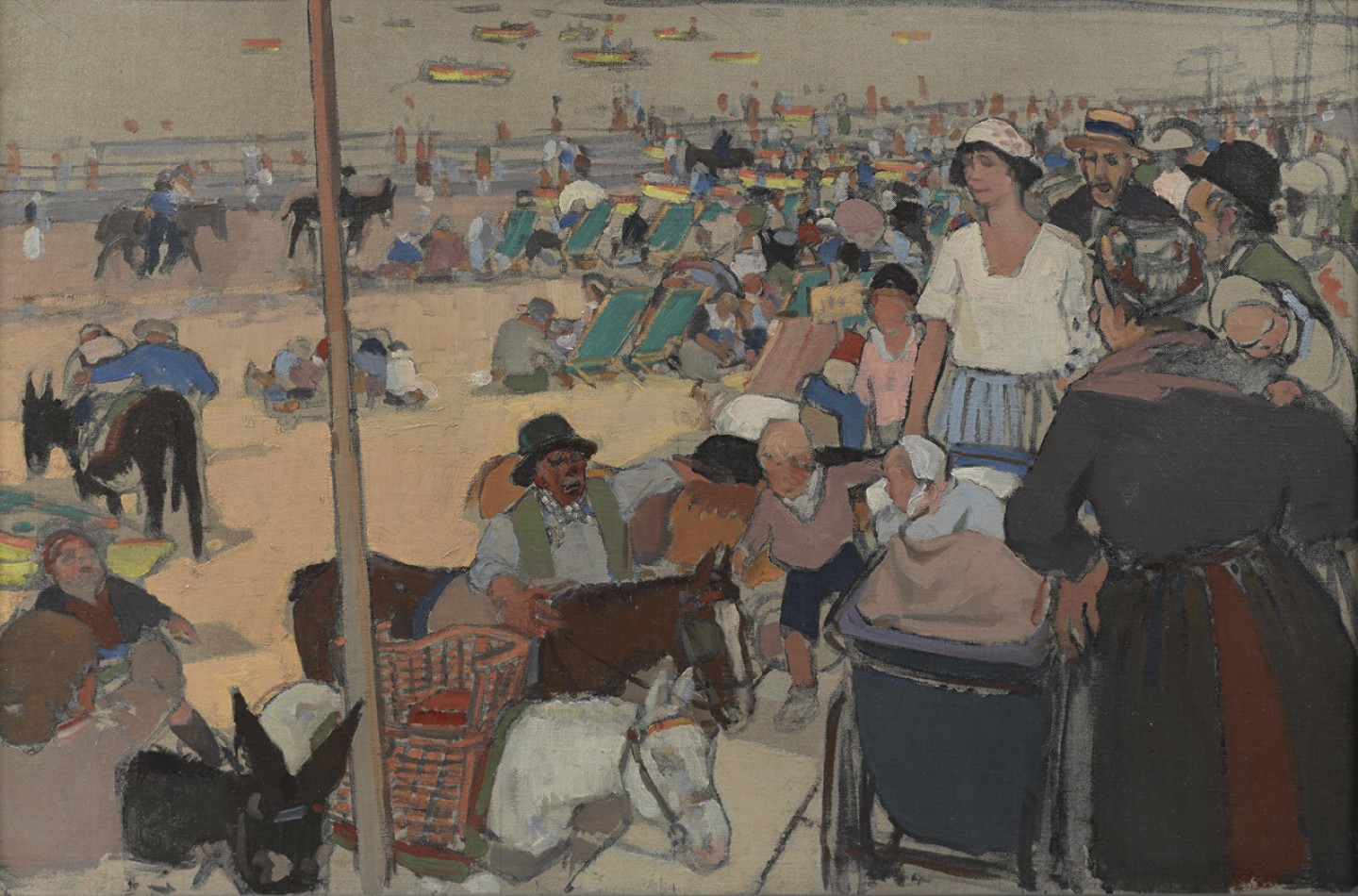
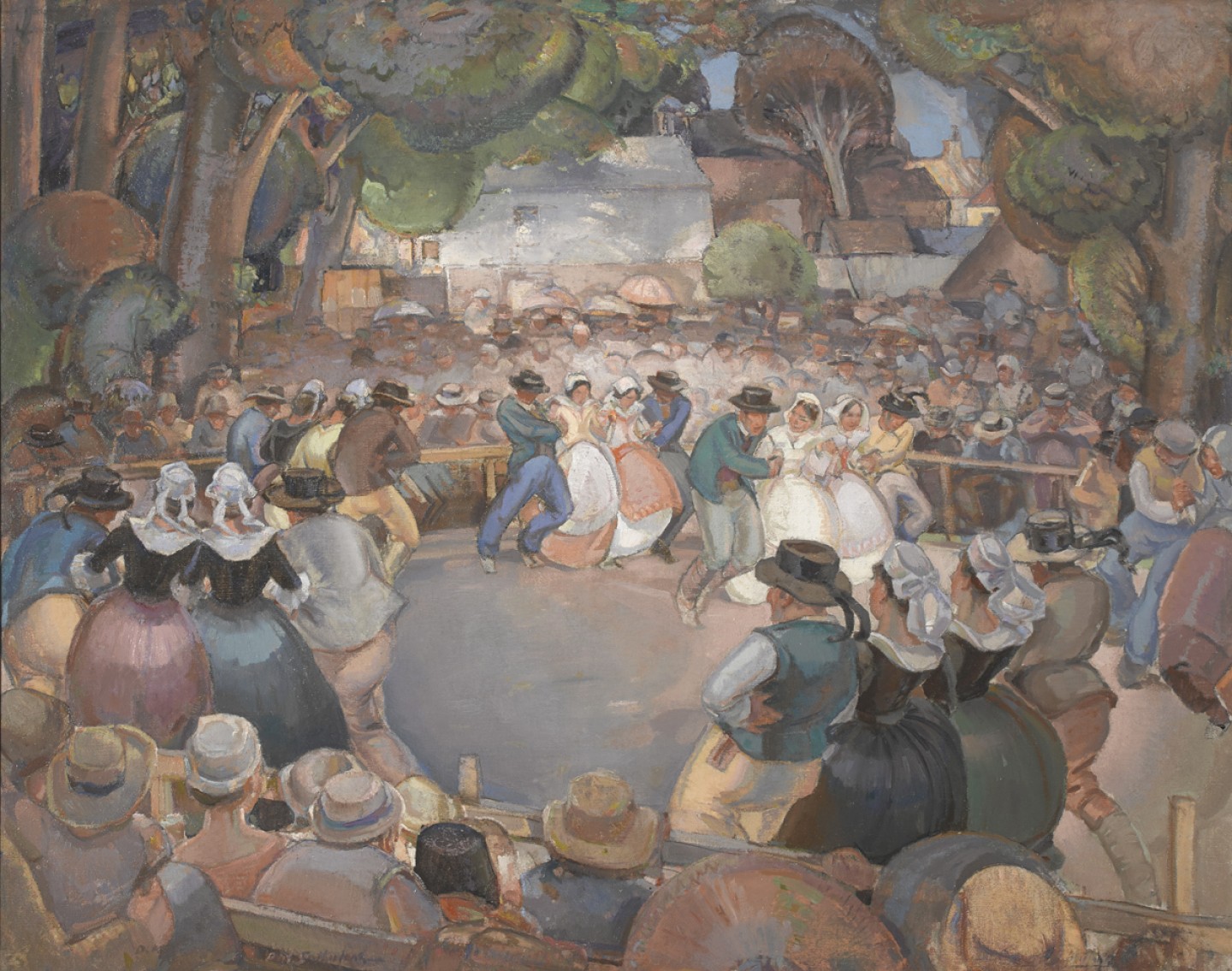
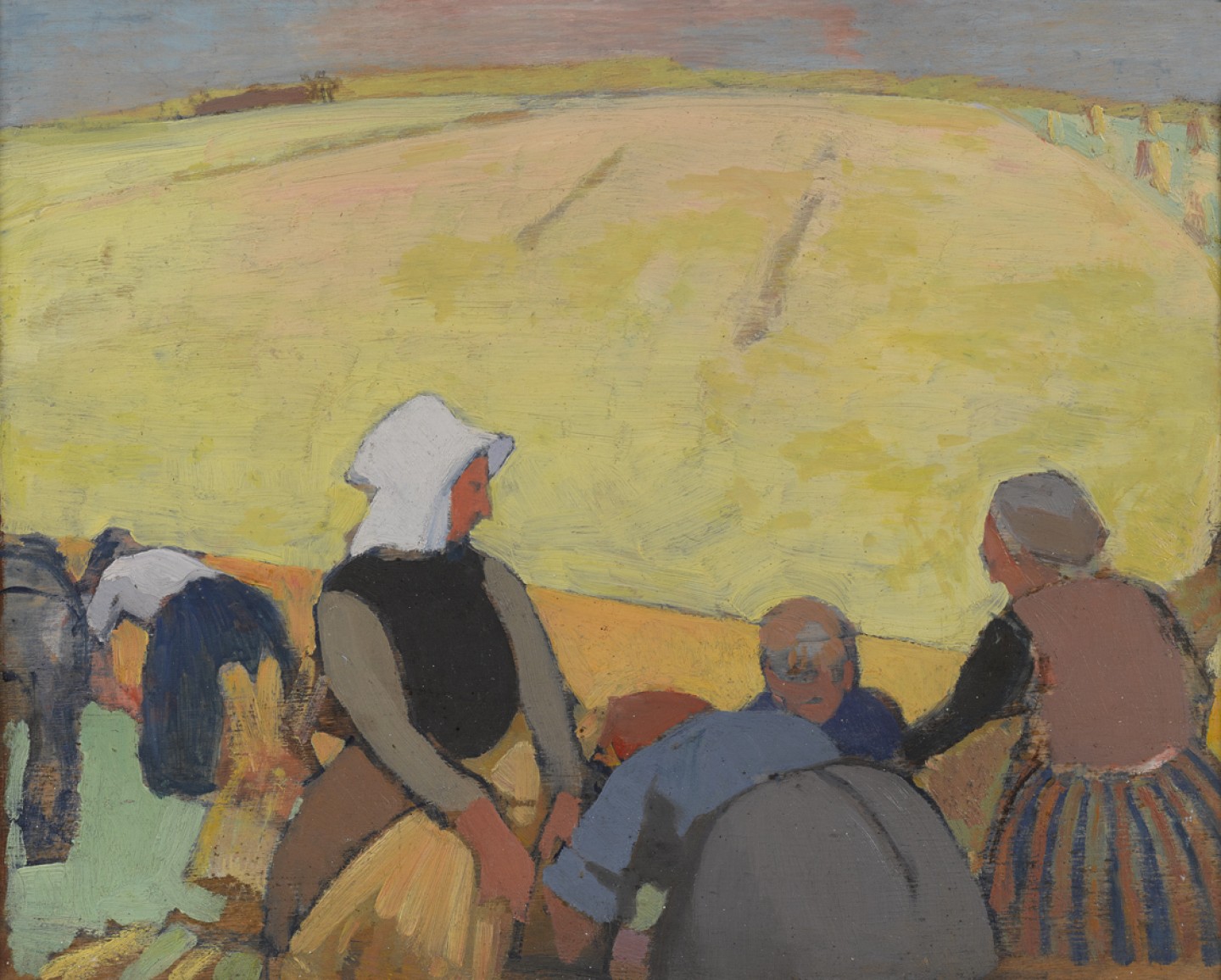
Many of Sutherland's other works focus on crowded, active scenes of people performing their daily lives or vacations. These often employ vibrant groupings of colour on fabric elements, like clothing and sails.
DETAILS
-
Artist
David Sutherland
-
Date
1920
-
Medium
Chalk and watercolour on paper
-
Object number
871
-
Dimensions unframed
76 × 84 cm
-
Place depicted
Dunoon (2650681)
-
Marks
Signed bottom left
-
Copyright
© The Artist's Estate
ARTIST PROFILE
David MacBeth Sutherland RSA, 1883-1973
Born in Wick, Caithness, Sutherland worked in a law office for two years before moving to Edinburgh, where he soon decided to take up art. From 1906 to 1909 he attended the Royal Scottish Academy's Life Class, where Charles Hodge Mackie was an important influence. He was awarded the Carnegie Travelling Scholarship, which allowed him to visit Paris and Spain in 1911, and in 1913 he went to The Netherlands and Belgium. The same year he joined the staff of Edinburgh College of Art, where he remained for twenty years except for service with the Royal Scots during the First World War. He was a successful teacher and respected by his colleagues.
Sutherland exhibited at the Edinburgh Group's early exhibitions in 1912 and 1913 and at the re-formed group's exhibition from 1919 to 1921. Dorothy Johnstone was a member of the re-formed group and a colleague on the college's staff until she and Sutherland married in 1924.
Between 1920 and 1924 Sutherland spent most of his summers at Concarneau, on the south coast of Brittany, which inspired many of his best paintings. During the late 1920s he began painting in the north-east of Scotland, often camping with William Gillies and John Maxwell.
In 1938 Sutherland was appointed Head of Gray's School of Art in Aberdeen, a post he held with distinction for some ten years. As well as being a figure and landscape painter, he executed many fine portraits.