Column-Drum to Drum
Ian Hamilton Finlay


DESCRIPTION
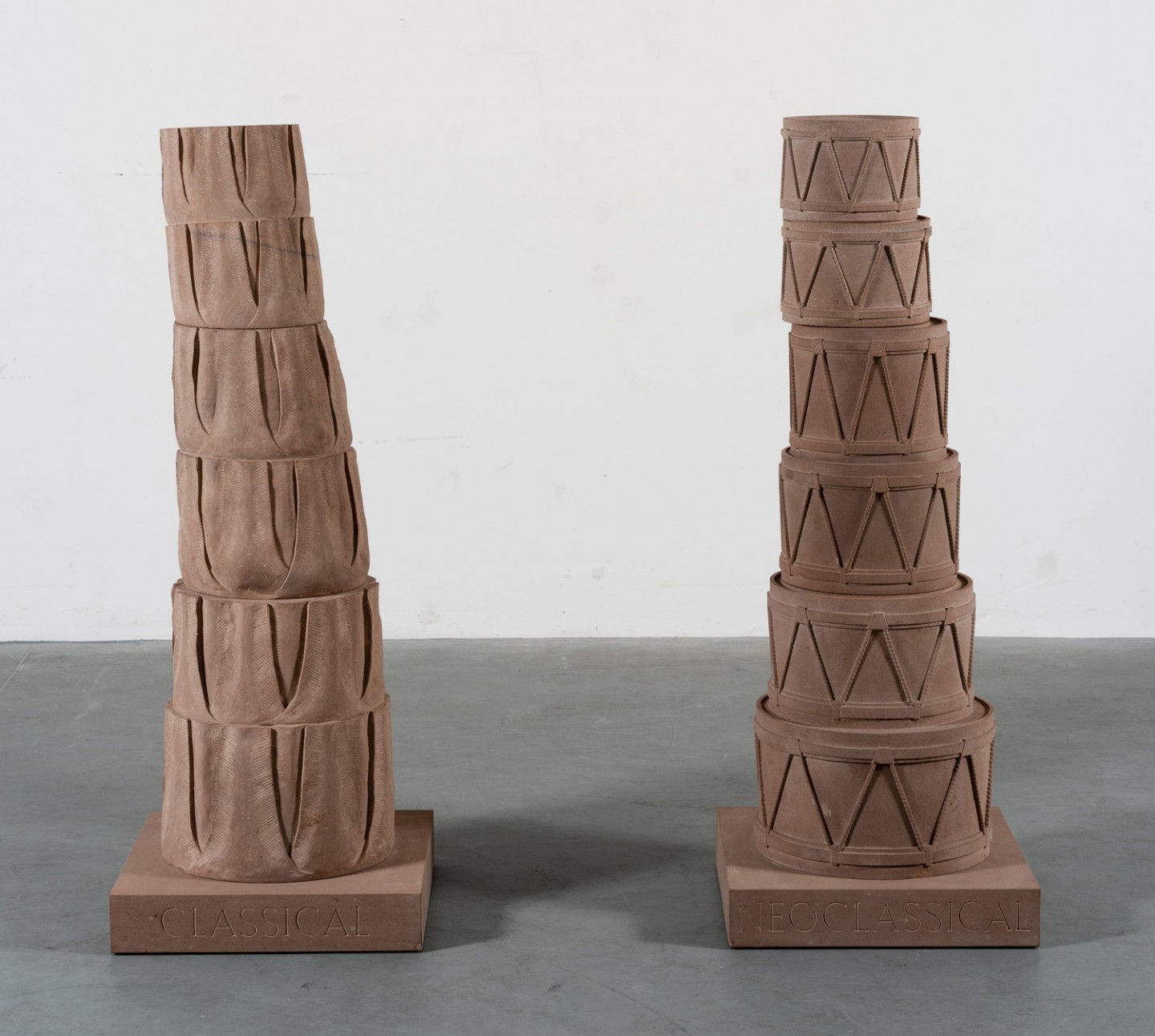
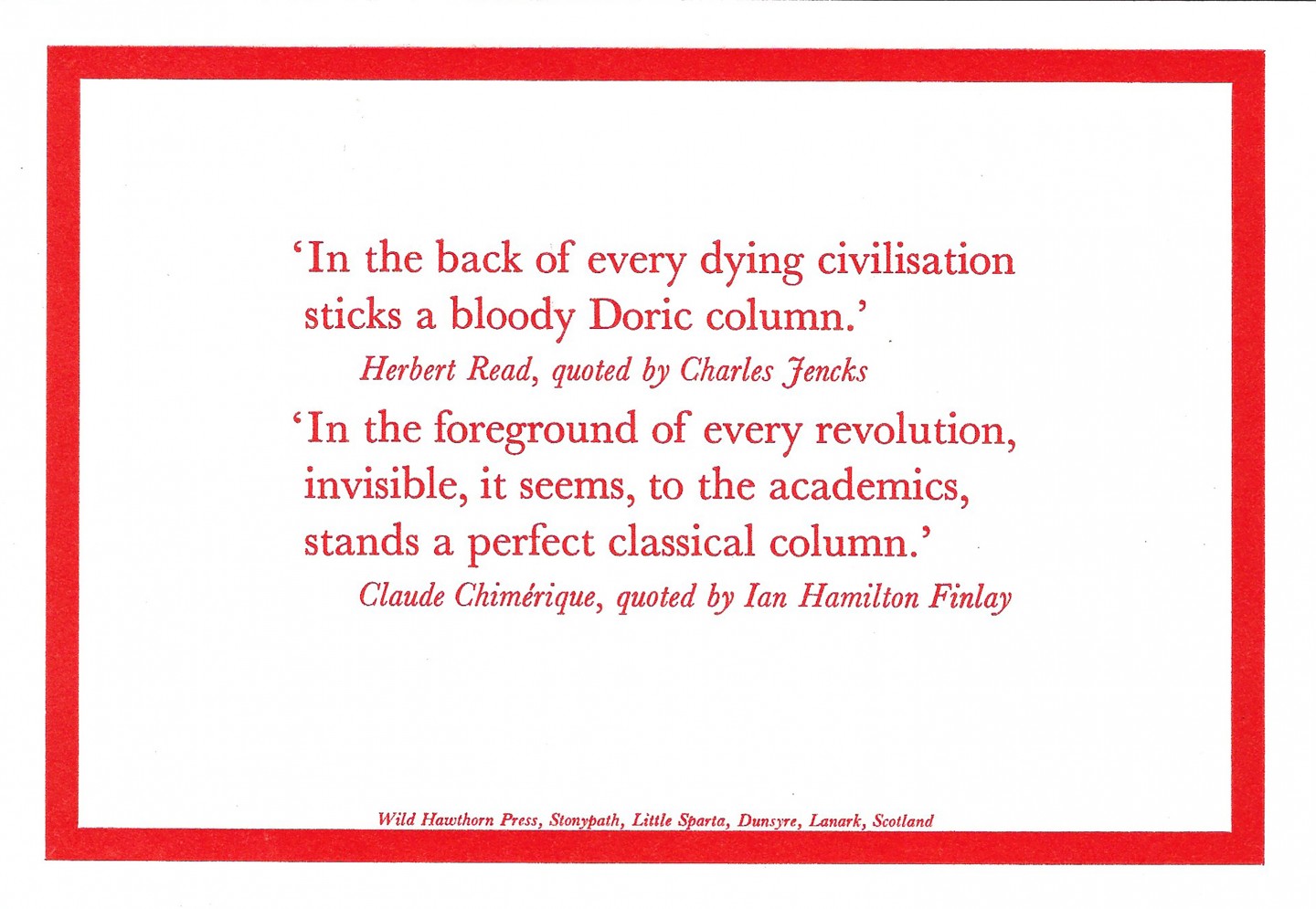
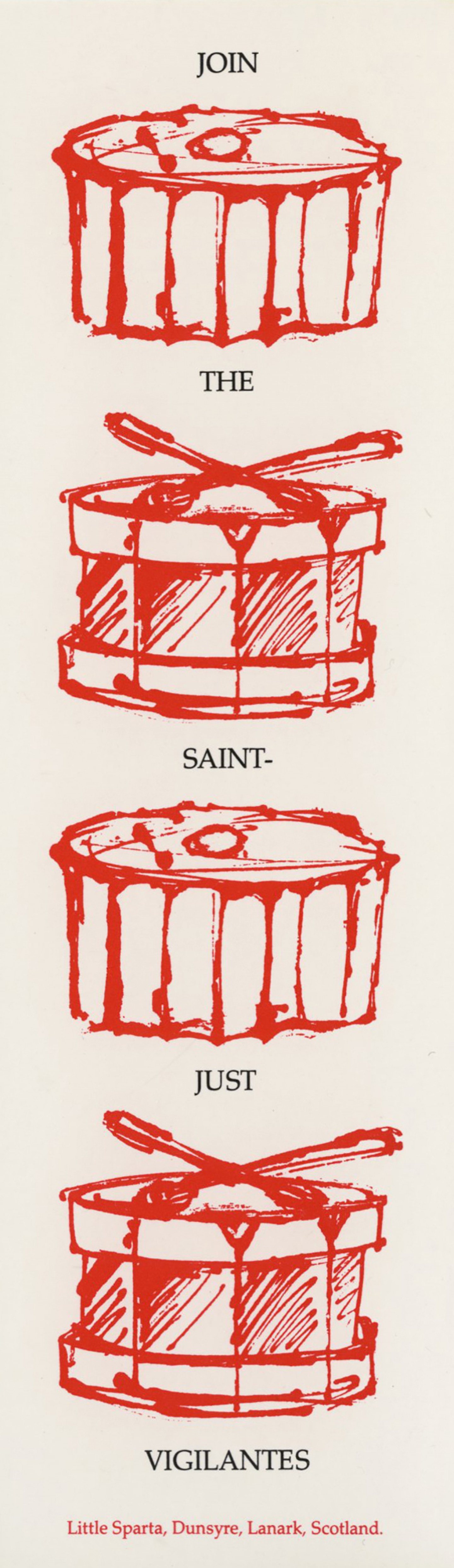
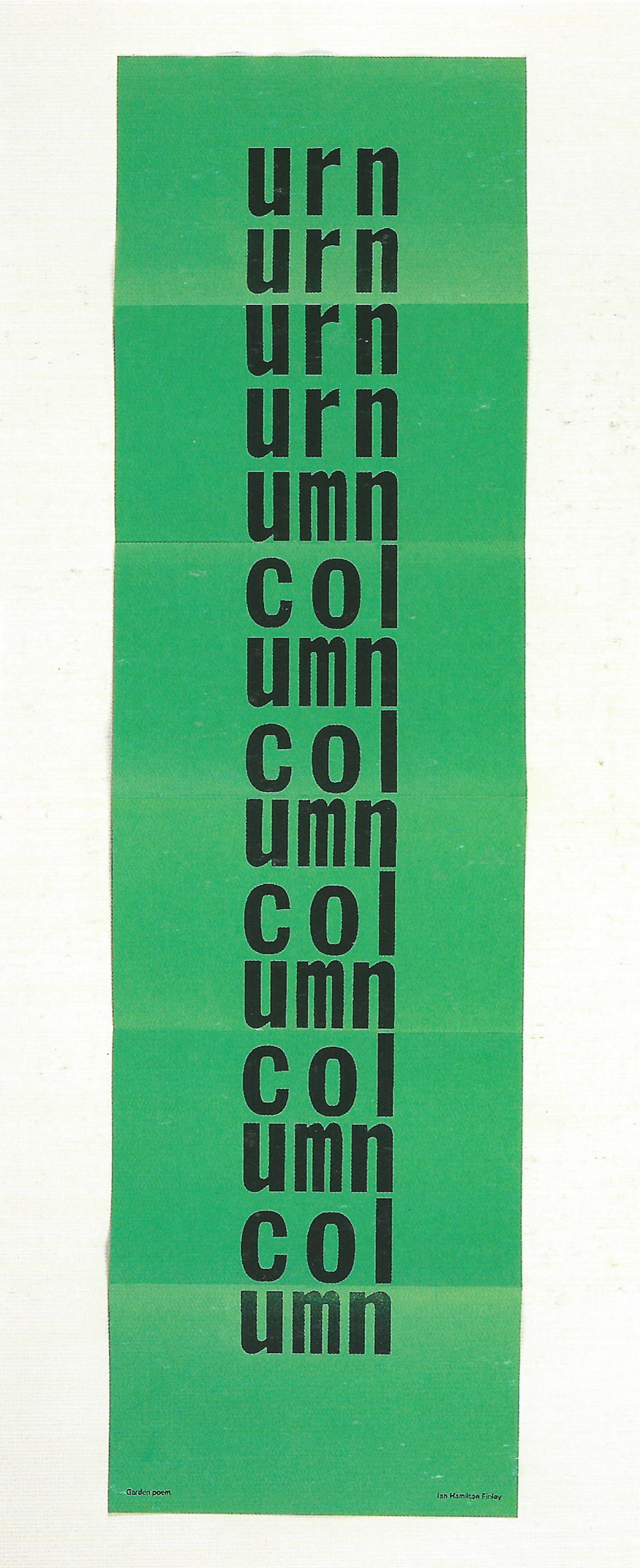
Column-Drum to Drum by Ian Hamilton Finlay (1925-2006) is a silkscreen with four elements on it, that shift from a piece of a column slowly into a drum. This shift is also noted in red text against the black background and a quote that reads 'What constitutes republic is the total destruction of all that is opposed to it', from Saint Just. The drum here connects the classical tradition through neoclassical practice to modern revolutions, which often contain some drumming or chanting element.
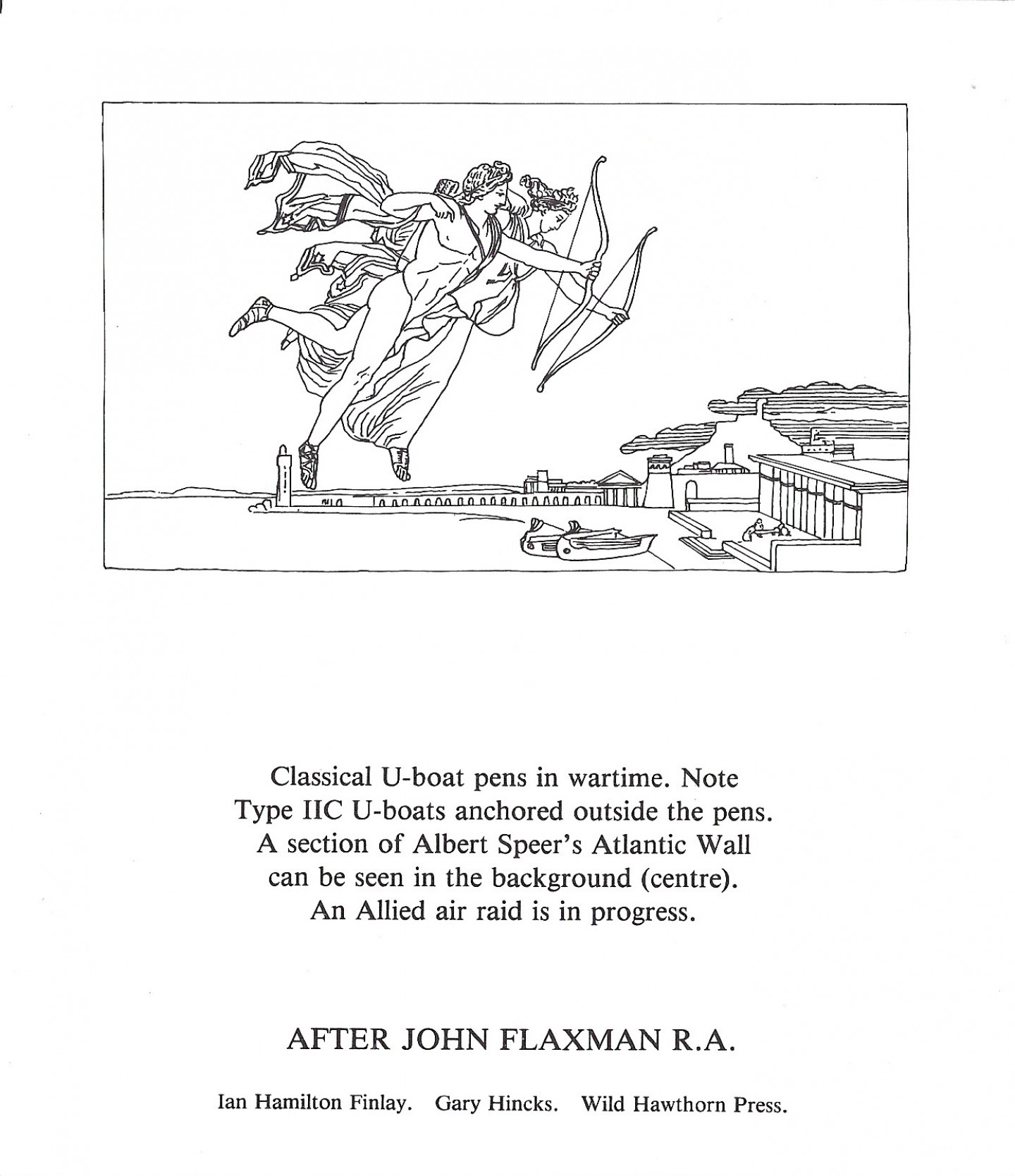
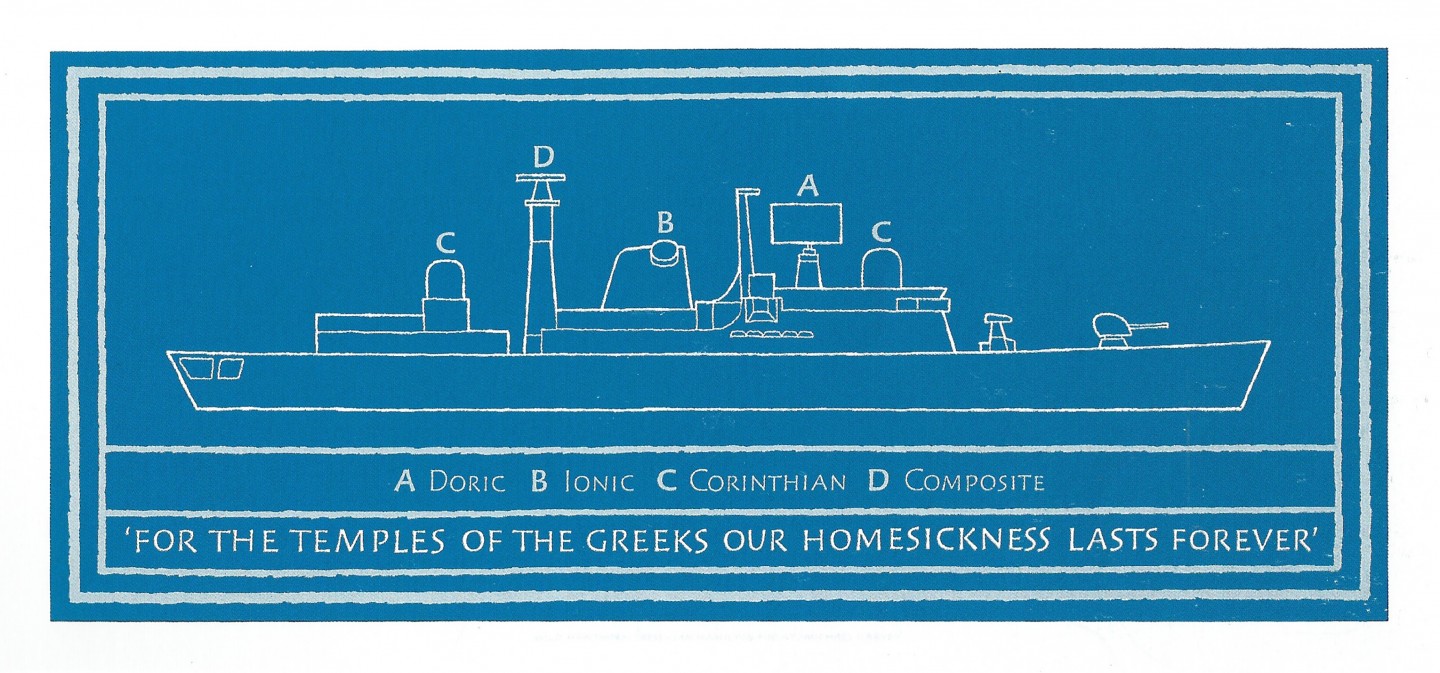
Finlay's work was well known in combining elements from modern life with classical traditions and themes, presenting the central focus of neoclassism throughout his work. He also often referenced revolutions through these tones, and included symbolism from the French Revolution. Similar works sharing this call to action were also done by Finlay for the Saint-Just Vigilantes, who were a conceptual art group and protest movement created by Finlay in the 1980s. The group was founded to defend Finlay against the Scottish Arts Council during a funding dispute and was named after the French Revolutionary figure Louis de Saint-Just. This work was done in partnership with Gary Hincks, a fellow artist.
DETAILS
-
Artist
Ian Hamilton Finlay
-
Date
1991
-
Medium
Silkscreen
-
Object number
3244
-
Dimensions unframed
23.8 × 57 cm
-
Dimensions framed
31.6 × 64.8 × 3.5 cm
-
Copyright
© Courtesy of the Estate of Ian Hamilton Finlay
ARTIST PROFILE
Ian Hamilton Finlay CBE, 1925-2006
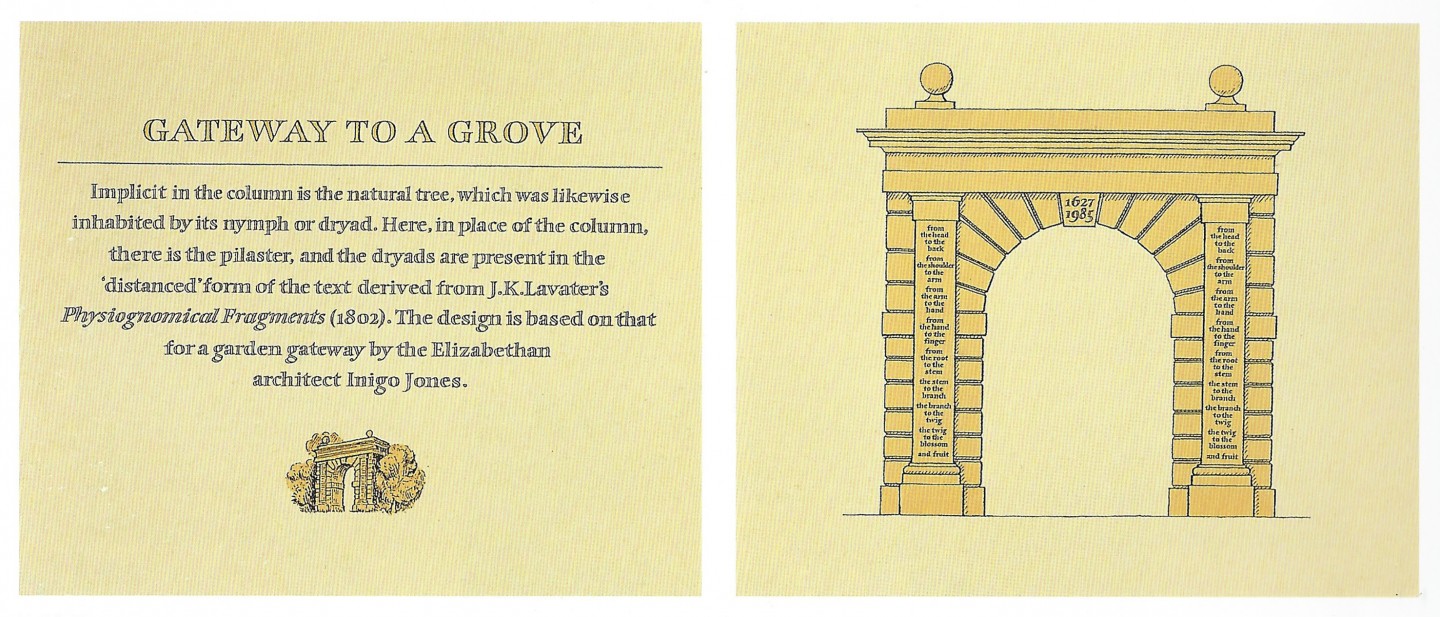
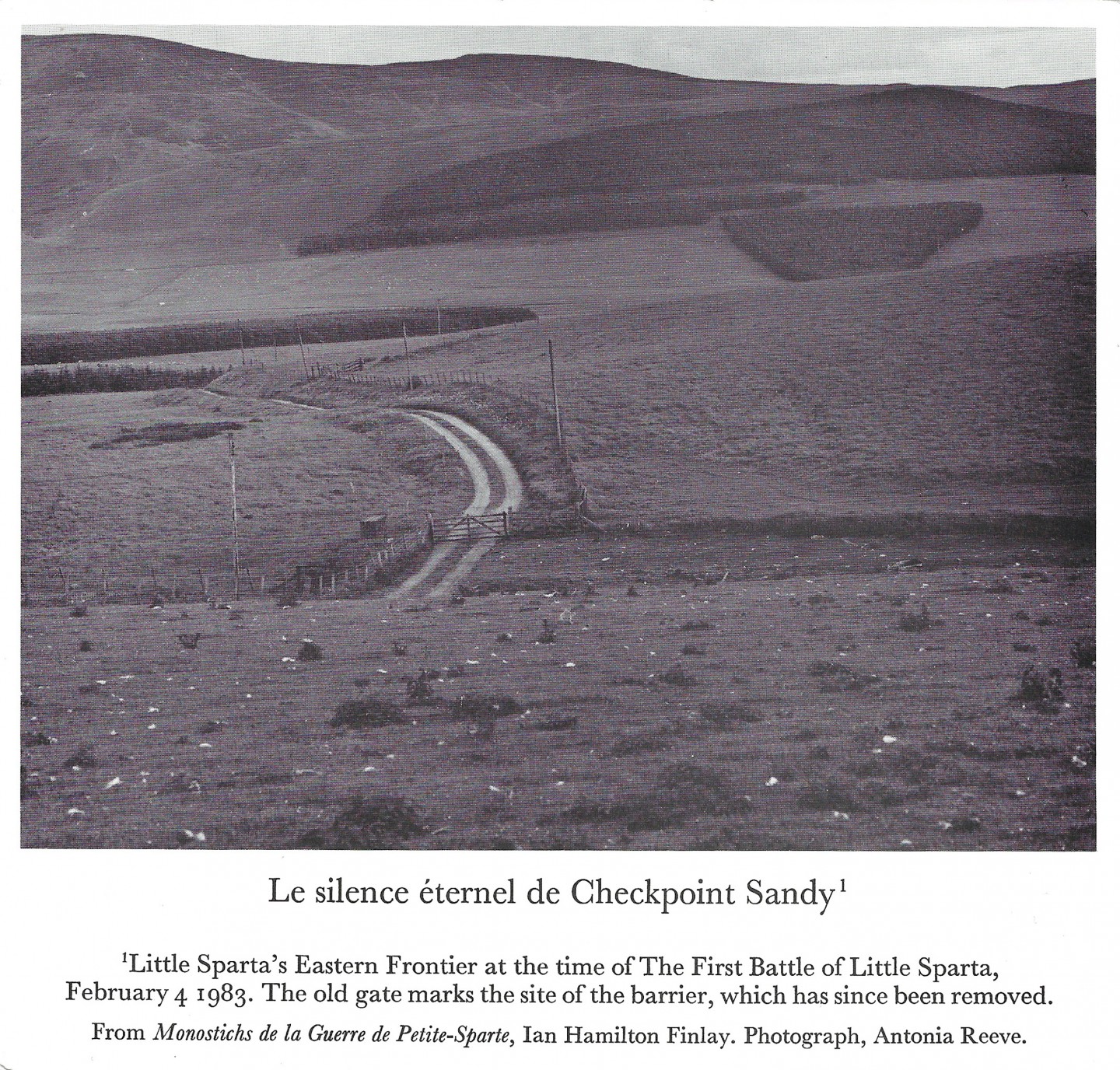
Although he studied at Glasgow School of Art, Finlay’s first creative success was as a writer. His discovery of concrete poetry in the 1960s was a major breakthrough in his practice and he began to produce booklets, posters, and wall-mounted works combining text and form. Major works of conceptual sculpture using text were produced by craftsmen to his specifications. Drawing on ideas from classical philosophy and the French Revolution, he began to exhibit widely and was shortlisted for the Turner Prize in 1985. His garden at Little Sparta in the Pentland Hills, begun in 1966 and now looked after by a trust, is considered to be the finest manifestation of his work.