Calle Pescheria, Venice
Muirhead Bone


DESCRIPTION
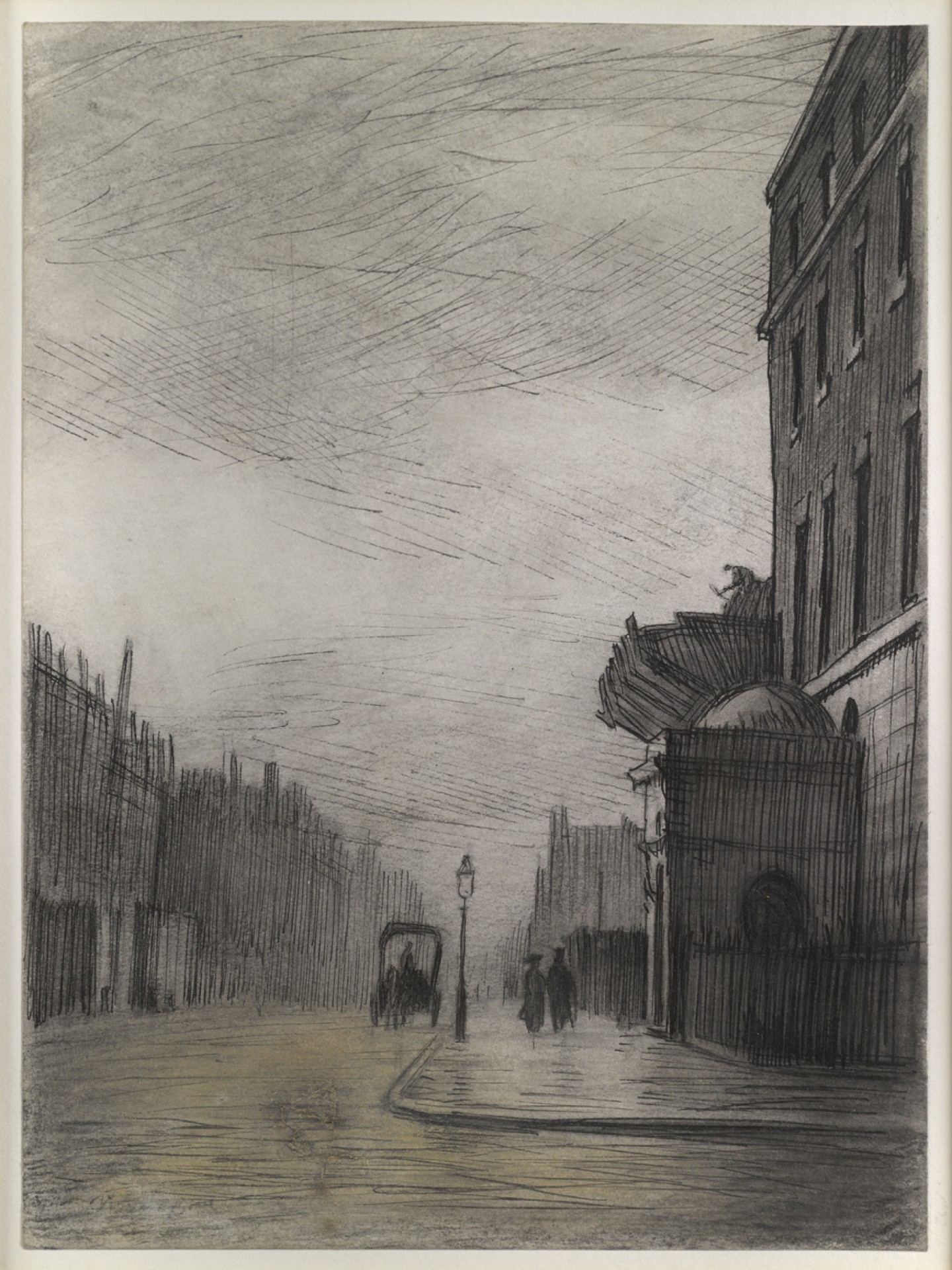
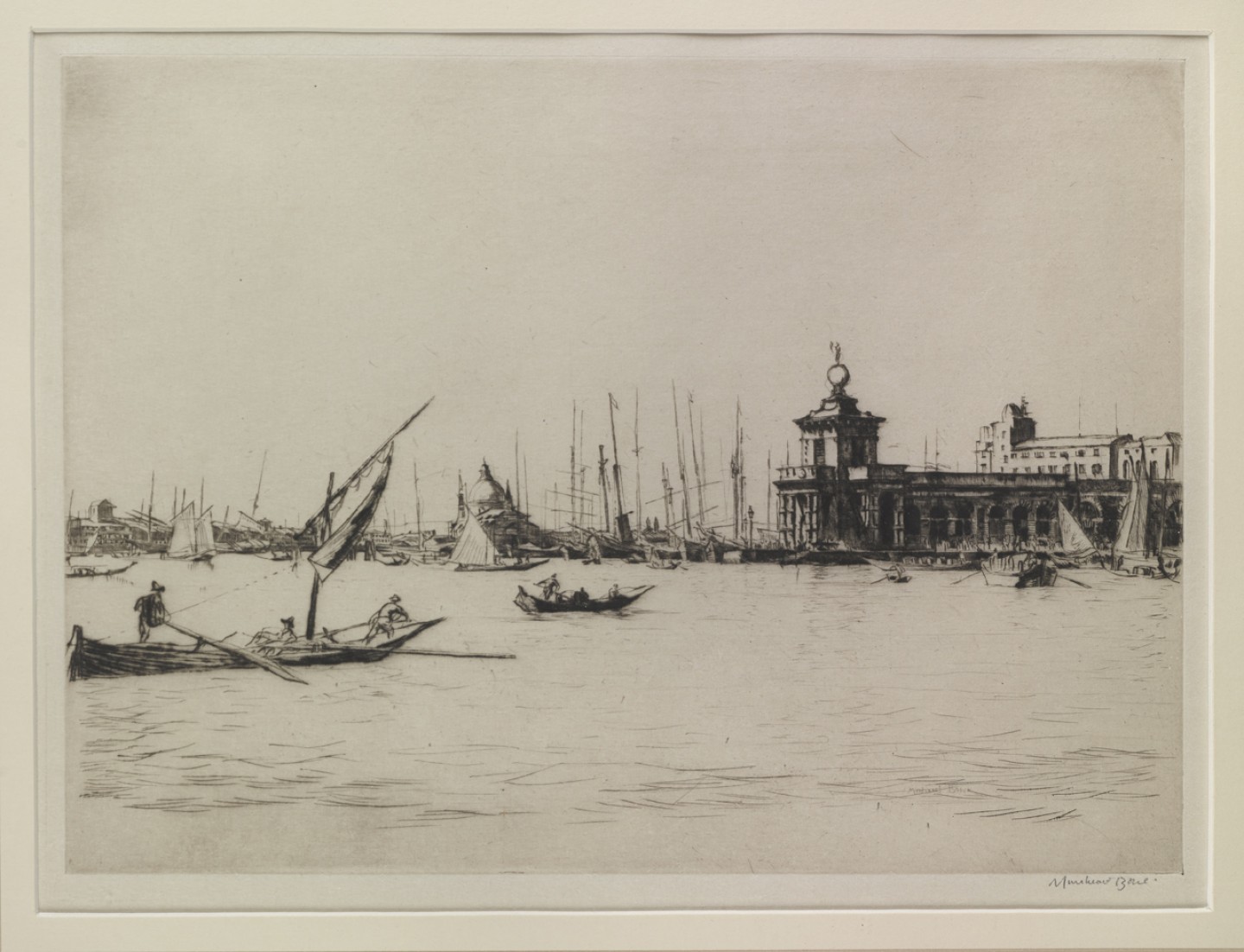
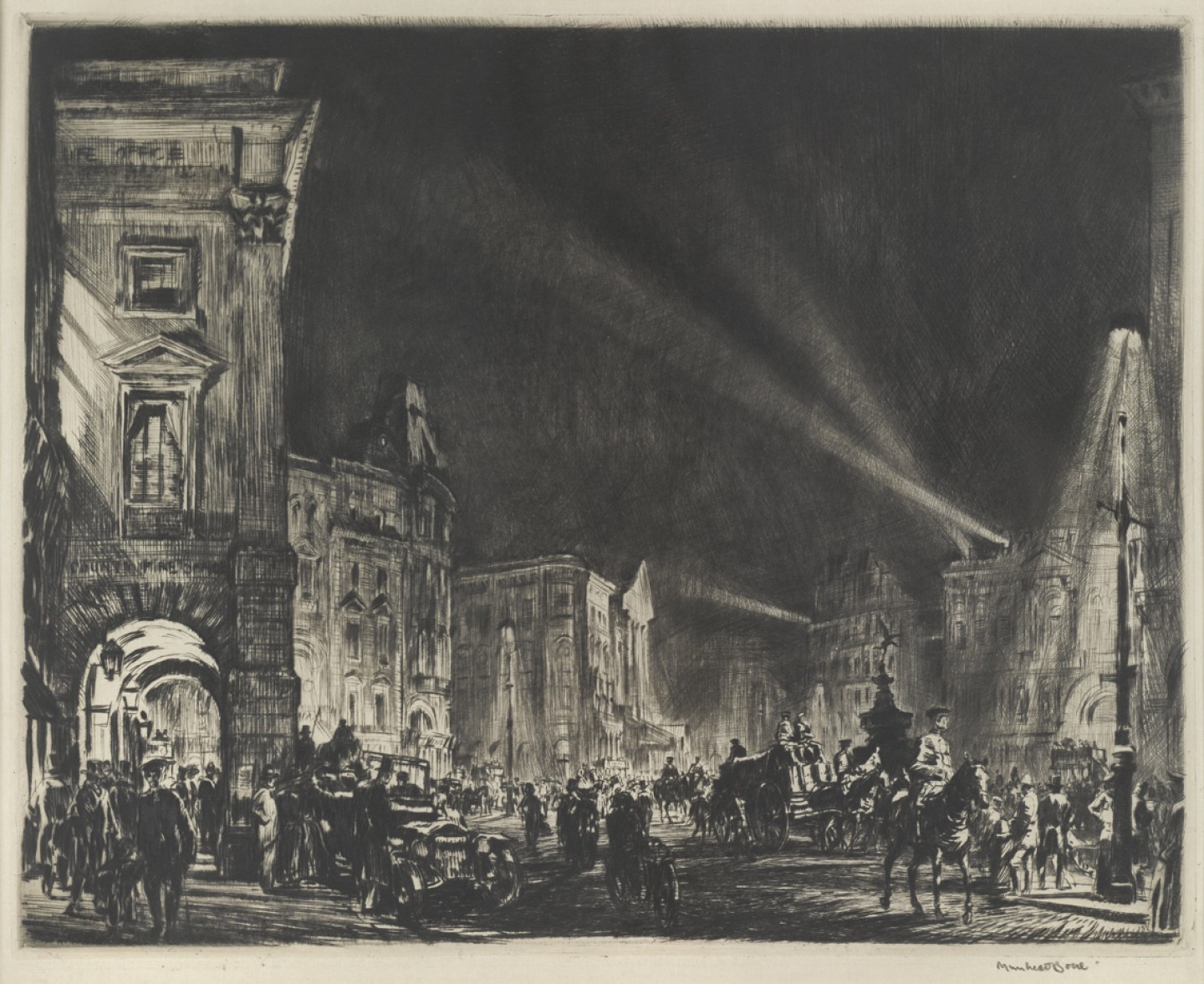
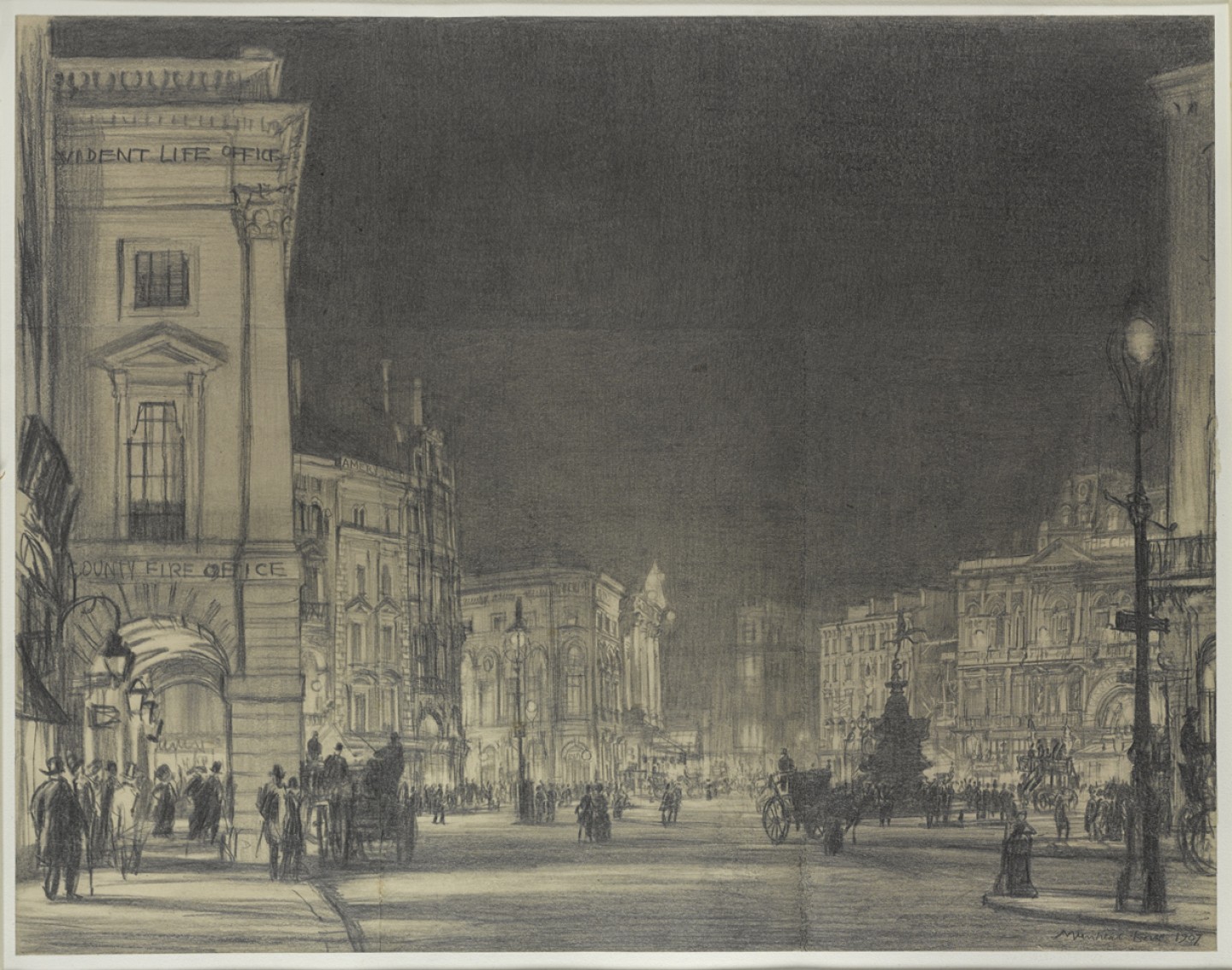
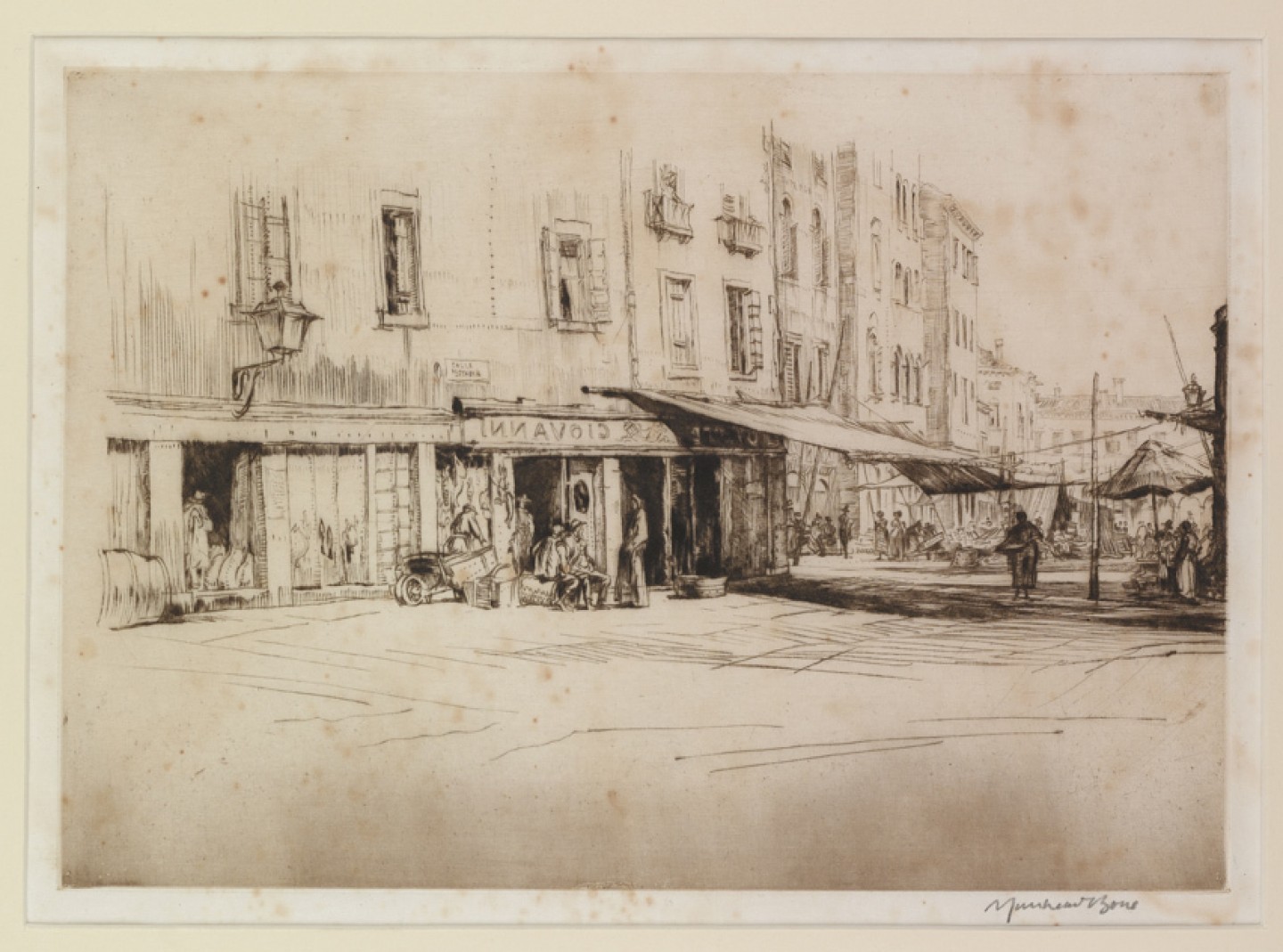
This etching by Muirhead Bone (1876-1953) depicts a street scene in Venice that was popular among artists including Bone, reflecting urban life in the city as figures can be seen going about their day to day lives. Bone uses shadows to create the perspective of looking down a bustling street, capturing the fabric of the market tents with these shadows and curving linework. The architecture is captured in immense detail using shadows and different concentrations of lines which strongly reflects Bone's training as an architectural draughtsman, while the people and foreground were created with looser strokes likely due to Bone capturing the image in real time and accomodating their lively movements.
Bone was well known for his work capturing architectural subjects and made a profit selling his prints. This print is one that gained him popularity as an etcher during the 'Etching Revival' of 1880-1930, allowing him to be selected as the first War Artist in the First World War and again for World War Two. The title of this print conveys its subject, with "calle" meaning a narrow street and "pescheria" referring to the fish market in the background.
DETAILS
-
Artist
Muirhead Bone
-
Date
c. 1912
-
Medium
Etching
-
Object number
1039
-
Dimensions framed
43 × 50 cm
-
Marks
Signed bottom left
-
Subject
-
Copyright
© Estate of Sir Muirhead Bone. All Rights Reserved, DACS 2020
ARTIST PROFILE
Sir Muirhead Bone HRSA HRSW HON RE HON ARIBA, 1876-1953
The son of a journalist, Bone was born in Glasgow and attended evening classes at Glasgow School of Art while apprenticed to an architect for three years. In 1894 he decided to become a full-time artist, working for a period as a freelance illustrator for the Scots Pictorial. His architectural training left him with a fascination with buildings, which he often depicted under construction and demolition. A consummate draughtsman, he first came to prominence as a printmaker, later becoming an etcher of international renown. However, he is remembered chiefly for his drawings in a range of media. He travelled widely, and was a distinguished was artist during both world wars.